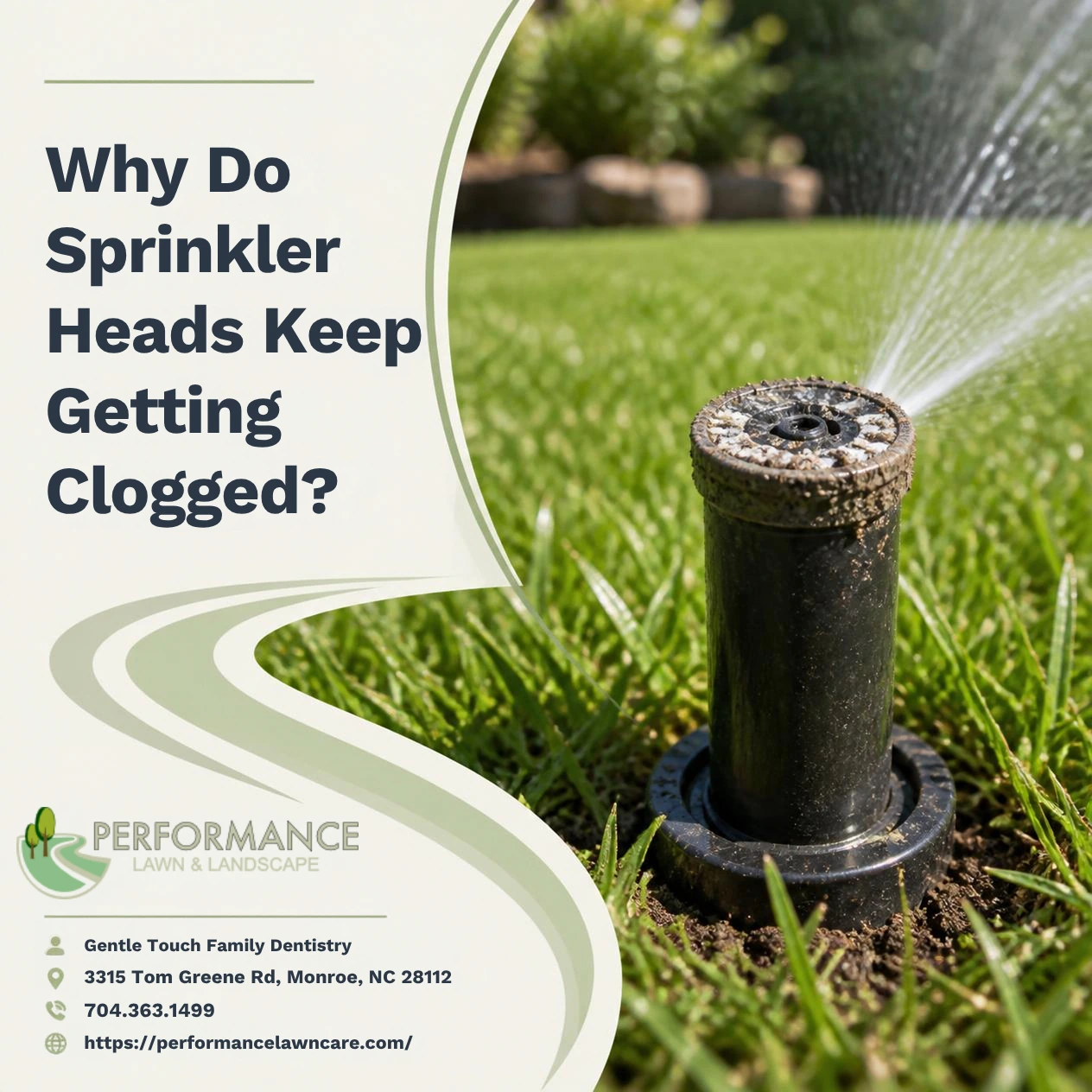
Sprinkler heads usually keep getting clogged because dirt, grass clippings, small debris, mineral deposits, or sediment are repeatedly entering or collecting inside the nozzle. If the same head clogs again soon after cleaning, the problem may be coming from the irrigation line, poor head placement, damaged seals, or the quality of the water moving through the system.
A single clog is usually easy to clean. Repeated clogs deserve more attention because they can reduce watering coverage, create dry areas in the lawn, and sometimes point to a larger irrigation problem.
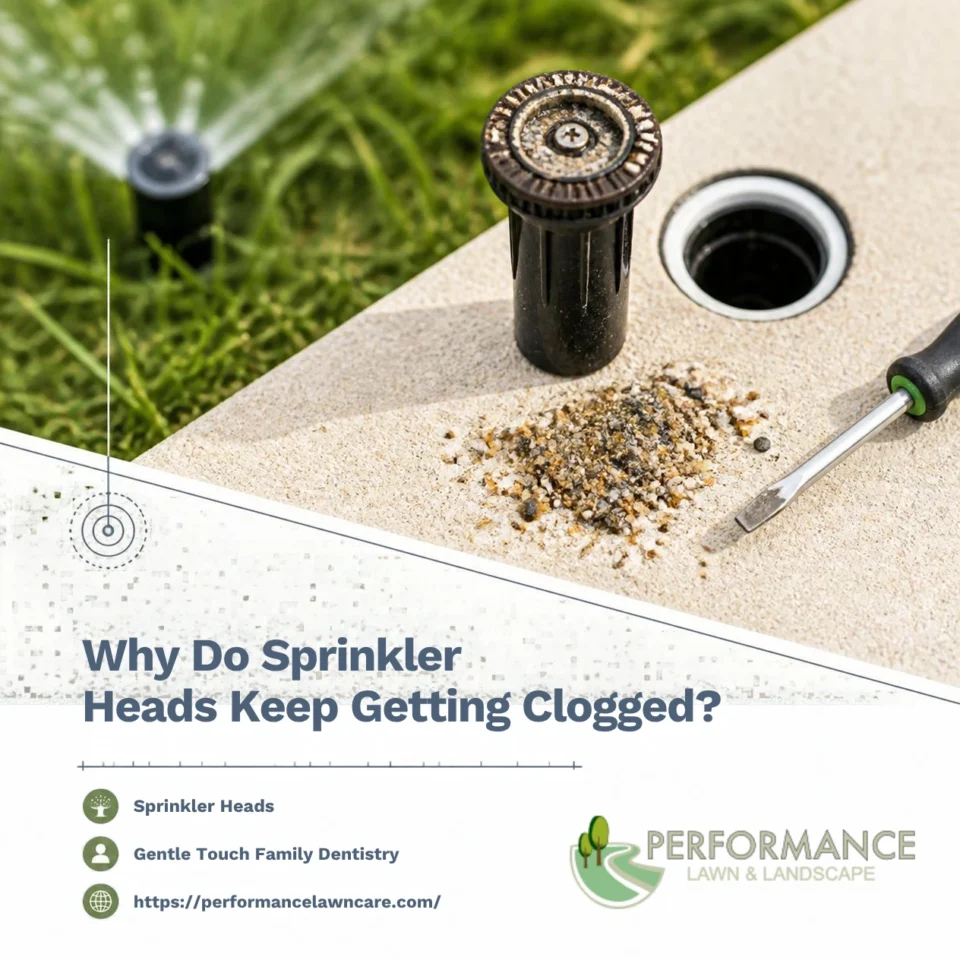
Why Do Sprinkler Heads Keep Getting Clogged?
Sprinkler heads operate close to the ground, which makes them vulnerable to anything that can enter the nozzle or collect around the moving parts.
Common causes include:
- Soil washing into the sprinkler body
- Grass clippings collecting over the nozzle
- Mulch or landscape debris entering the head
- Sand or sediment inside irrigation lines
- Mineral deposits from hard water
- Debris introduced during irrigation repairs
- Damaged sprinkler seals
- Heads installed too low in the soil
- Older nozzles becoming worn or distorted
The pattern matters.
If one sprinkler head keeps clogging, the issue may be local to that particular head. If several sprinklers are clogging at the same time, it is more likely that debris or sediment is moving through the irrigation system.
Before repeatedly cleaning the same nozzle, look at where the sprinkler sits and what happens immediately before the clog develops.
How Does Dirt Get Into Sprinkler Heads?
Dirt can enter sprinkler heads several different ways.
One of the most common is simply having the sprinkler installed too low. When the top of a pop-up sprinkler sits below the surrounding soil or turf, loose dirt can wash over it during rain or irrigation.
As the sprinkler retracts, some of that material may move into the body of the head.
Soil can also enter when:
- A sprinkler head is damaged
- The surrounding ground settles
- The system is repaired and an irrigation line is left open
- A broken pipe allows soil into the line
- Landscaping work disturbs the soil around the sprinkler
- Heavy rain moves loose soil across the irrigation zone
Small grains of sand may not look significant, but sprinkler nozzles contain narrow openings designed to control water flow. A small amount of sediment can noticeably change the spray pattern.
If dirt keeps appearing inside the same sprinkler, inspect the surrounding soil level and the condition of the sprinkler body instead of focusing only on the nozzle.
Can Grass and Landscaping Debris Block Sprinklers?
Yes.
Grass, weeds, mulch, leaves, and lawn clippings can all interfere with sprinkler operation even when they do not actually enter the nozzle.
A pop-up sprinkler needs enough clearance to rise fully above surrounding vegetation.
Problems often develop when:
- Grass grows taller around the head
- Turf begins growing over the sprinkler
- Mulch shifts into the spray area
- Mowing leaves clippings across the nozzle
- Weeds grow directly beside the head
- Tree or shrub leaves collect around the sprinkler
Sometimes what looks like a clogged sprinkler is actually a blocked sprinkler.
The nozzle may be perfectly clean, but the water stream hits grass blades or mulch immediately after leaving the head.
Check the area around the sprinkler while the system is running. If water is spraying strongly but being redirected by vegetation, clearing the area around the head may solve the problem.
Keep enough space around sprinklers for them to rise and spray without obstruction, but avoid digging aggressively around the head because irrigation lines and fittings may be close to the surface.
Can Water Quality Cause Repeated Sprinkler Clogs?
Yes. The water itself can contribute to clogging.
Homes using well water or water with elevated mineral content may experience deposits inside sprinkler nozzles over time.
Calcium and other dissolved minerals can leave hard, crusty buildup around small openings. Iron can sometimes leave orange or brown staining, while sediment may collect inside screens and filters.
Signs that water quality may be contributing include:
- White crust around sprinkler openings
- Orange or brown staining
- Several heads developing similar problems
- Clogs returning after nozzles are cleaned
- Small screens repeatedly filling with sediment
- Reduced spray from multiple zones
Mineral accumulation tends to happen gradually rather than overnight.
Cleaning may restore the sprinkler temporarily, but repeated buildup may indicate that the irrigation system needs filtration, flushing, or another adjustment depending on the water source.
If a property relies on untreated well water or contains significant sediment, the irrigation system may need to be evaluated with water quality in mind rather than treating every clogged nozzle as an isolated problem.
How Do Clogged Nozzles Affect Watering Coverage?
A clogged sprinkler nozzle can change far more than the amount of water coming from one head.
Irrigation systems are designed around overlapping spray patterns. Each sprinkler helps cover an area that may also receive water from neighboring heads.
When one nozzle becomes partially clogged, its spray may become:
- Shorter than normal
- Uneven
- Weak
- Distorted
- Directed to one side
- Broken into large droplets
- Reduced to a trickle
That can leave part of the lawn consistently underwatered.
Over time, homeowners may notice:
- Dry spots
- Brown patches
- Thinning grass
- Uneven turf color
- Plants wilting in one section
- Other sprinklers running longer to compensate
Increasing the watering time does not necessarily solve the problem.
If one sprinkler is blocked while others are working normally, running the zone longer may simply overwater the areas receiving proper coverage.
Correcting the spray pattern is usually more effective than adding minutes to the irrigation schedule.
Can Irrigation Line Debris Cause Multiple Heads to Clog?
Yes.
When several sprinkler heads in the same zone begin clogging, debris inside the irrigation line should be considered.
Sediment can enter the system after:
- A pipe breaks underground
- A repair is completed
- A valve is replaced
- A sprinkler head is removed
- A line is cut during landscaping work
- A well or water supply introduces sediment
When water begins flowing again, that debris can move through the pipe until it reaches the small openings in sprinkler nozzles.
The nozzles then act almost like filters.
One sprinkler may clog first, followed by another farther down the line.
Repeatedly cleaning individual heads will not solve the problem if new sediment keeps arriving.
In those situations, the irrigation zone may need to be flushed so loose debris can leave the system before it reaches the sprinkler nozzles again.
When Is Cleaning a Sprinkler Head Enough?
Cleaning is often enough when the clog is minor and clearly limited to one sprinkler.
A simple cleaning may solve the problem if:
- Grass clippings are blocking the nozzle
- Loose dirt is sitting on top of the head
- A small piece of debris is trapped in the nozzle
- A removable filter screen contains sediment
- The spray pattern returns to normal after cleaning
- The clog does not quickly return
Depending on the sprinkler design, the nozzle or filter may be removable.
After shutting off the irrigation zone, you can inspect the opening for visible debris. Small screens can sometimes be rinsed clean.
Avoid pushing sharp objects into the nozzle opening.
Sprinkler nozzles are designed with specific opening sizes and patterns. Enlarging or damaging the opening can permanently change how the sprinkler distributes water.
After cleaning, run the zone again and watch the sprinkler.
You want to see a consistent spray pattern that matches nearby heads rather than simply seeing water come out.
When Should a Clogged Sprinkler Head Be Replaced?
Replacement may make more sense when cleaning no longer restores normal operation.
Sprinkler heads are exposed to lawn equipment, weather, foot traffic, soil movement, and repeated cycles of extending and retracting.
Eventually, components can wear out.
Consider replacing a head or nozzle when:
- The nozzle remains weak after cleaning
- The spray pattern stays distorted
- The head does not rise completely
- The sprinkler sticks in the raised position
- The body is cracked
- Water leaks around the stem
- Threads are damaged
- Internal seals are worn
- The nozzle repeatedly clogs despite a clean irrigation line
Sometimes only the nozzle needs replacement rather than the entire sprinkler body.
The replacement should match the irrigation system’s intended spray pattern, radius, and flow requirements.
Installing a random nozzle because it physically fits can create uneven watering.
Can Repeated Clogs Signal a Larger Irrigation Problem?
Yes.
One clogged nozzle does not usually indicate a serious problem. A pattern of recurring clogs can.
Repeated clogging may point to:
- Sediment moving through irrigation pipes
- A damaged underground line
- Poor system filtration
- Water-quality problems
- Failing valves
- Aging sprinkler components
- Incorrect sprinkler height
- Soil repeatedly entering damaged heads
Pay attention to whether the problem appears in one zone, throughout the property, or only near one particular sprinkler.
For example, if every sprinkler downstream from a recent pipe repair begins clogging, debris may have entered the irrigation line during the work.
If heads throughout the system develop white mineral buildup, water quality may be a bigger factor.
If one sprinkler near a driveway repeatedly fills with dirt, the problem may simply be its position or elevation.
The more consistent the pattern, the easier it becomes to narrow down the source.
When Should You Schedule an Irrigation Inspection?
An irrigation inspection is worthwhile when sprinkler problems keep coming back or when troubleshooting individual heads is no longer improving coverage.
Professional evaluation may be appropriate when:
- Several sprinkler heads repeatedly clog
- Dry spots keep appearing despite regular watering
- One irrigation zone has noticeably lower pressure
- Sediment continues appearing in cleaned nozzles
- Sprinkler heads repeatedly fill with dirt
- Water is bubbling from the ground
- The system has recently experienced a broken line
- Heads are leaking or failing to retract
- Mineral buildup affects multiple parts of the system
An irrigation professional can check more than the sprinkler nozzle.
The inspection may include pressure, valves, line condition, sprinkler placement, coverage patterns, filtration, leaks, and whether the installed heads are appropriate for the areas they are watering.
That wider evaluation can be especially useful when homeowners have already cleaned or replaced several heads without solving the problem.
Stop Treating the Same Clog Over and Over
A clogged sprinkler head is usually a small maintenance issue. A sprinkler head that clogs every few weeks is telling you something else may be going on.
Start with the obvious possibilities: remove grass and debris, check the nozzle, inspect the surrounding soil, and watch the spray pattern while the irrigation system is running. If the clog immediately returns or begins appearing in multiple sprinkler heads, look beyond the individual nozzle.
At Performance Lawn & Landscape, we help homeowners identify irrigation problems that affect lawn and landscape health, from uneven sprinkler coverage and damaged heads to recurring system issues that waste water and leave sections of the yard dry.
If your sprinklers keep clogging, spraying unevenly, or failing to cover your lawn properly, having the system inspected can help identify the cause before minor irrigation problems turn into stressed turf, unhealthy plants, or unnecessary water use.
FAQs
Why does the same sprinkler head keep clogging?
The same head may be installed too low, surrounded by loose soil, damaged, or positioned where grass and debris frequently collect. If cleaning only helps temporarily, inspect the sprinkler body and surrounding area for an ongoing source of contamination.
How do I know if my sprinkler nozzle is clogged?
A clogged nozzle may produce a weak stream, shortened spray distance, irregular spray pattern, or water that only comes from part of the opening. Compare the head with nearby sprinklers in the same zone.
Can hard water clog sprinkler heads?
Yes. Water containing higher concentrations of dissolved minerals can leave deposits in small sprinkler openings and filter screens. Repeated white or crusty buildup on several heads may indicate a water-quality issue.
Should I clean or replace a clogged sprinkler head?
Clean it first if the head is otherwise in good condition and the clog appears minor. Replacement may be better when the head is cracked, worn, leaking, sticking, or continues performing poorly after cleaning.
Why are several sprinkler heads clogged at once?
Multiple clogged heads can indicate sediment or debris moving through the irrigation line. This sometimes happens after a pipe break, system repair, valve work, or problems with the water supply.
Can clogged sprinklers cause brown spots in the lawn?
Yes. A partially clogged sprinkler may not throw water far enough to maintain proper overlap with nearby heads. The affected area can gradually become dry, stressed, thin, or brown even though the irrigation system runs on schedule.