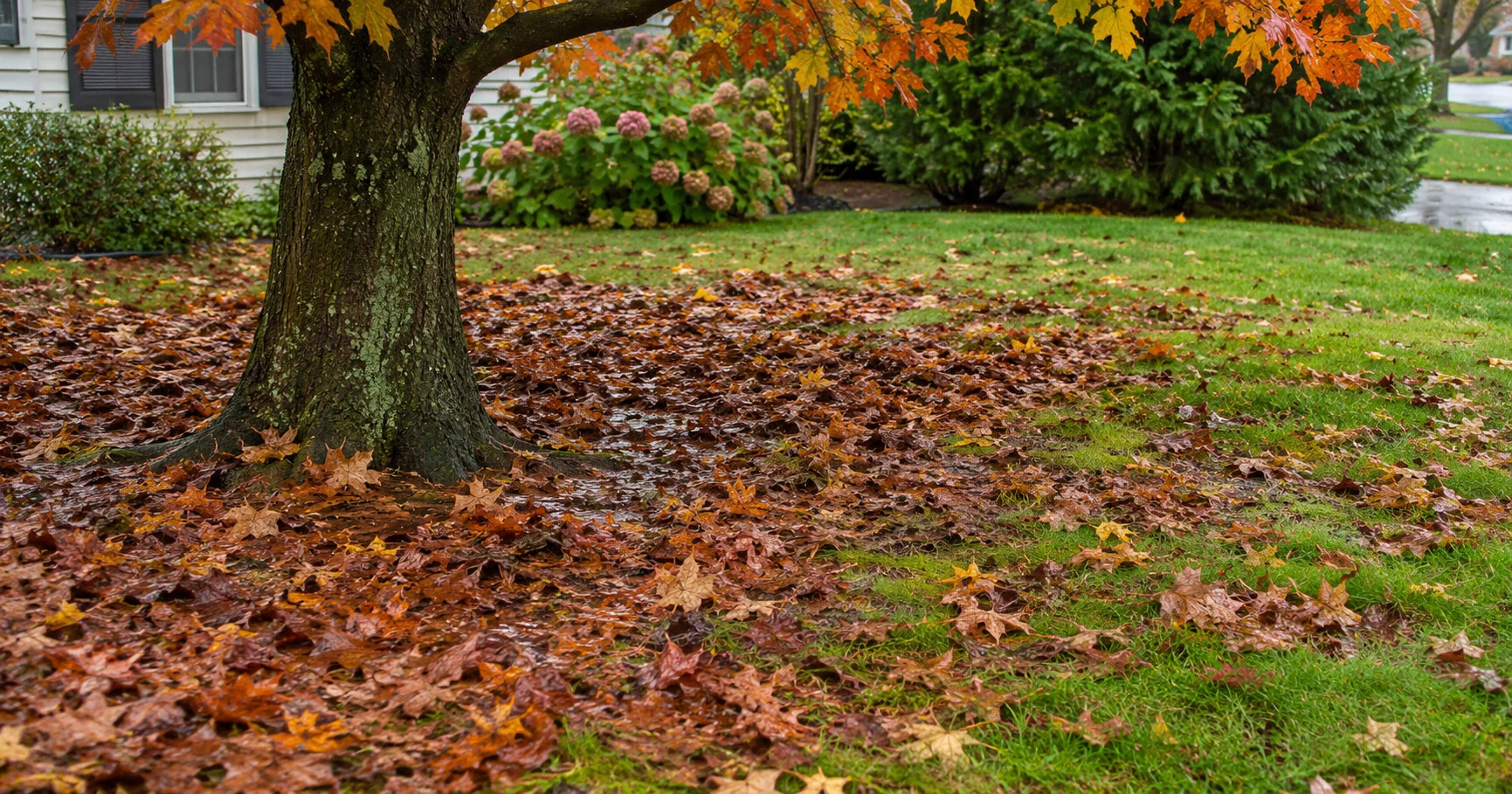
After several days of rain, the leaves scattered across your lawn can quickly turn into heavy, soggy piles. You might be tempted to clear them immediately, but working on wet grass can sometimes cause more damage than waiting.
So, should you remove wet leaves right away or give them time to dry?
The answer depends on how much leaf coverage you have, the condition of your lawn, and what the weather looks like over the next few days. A little patience can make cleanup easier, but leaving thick layers of wet leaves in place for too long can weaken your grass.
Quick Answer: Should You Remove Wet Leaves?
Wet leaves should be removed if they form thick, compacted layers that block sunlight and trap moisture against your grass. However, if leaf coverage is light and dry weather is expected soon, waiting can make cleanup easier and reduce lawn damage. Consider leaf depth, soil moisture, grass condition, and upcoming weather before deciding.
What Problems Can Wet Leaves Cause for Grass?
Wet leaves aren’t automatically harmful. The concern develops when they collect in heavy layers and stay against the grass for extended periods.
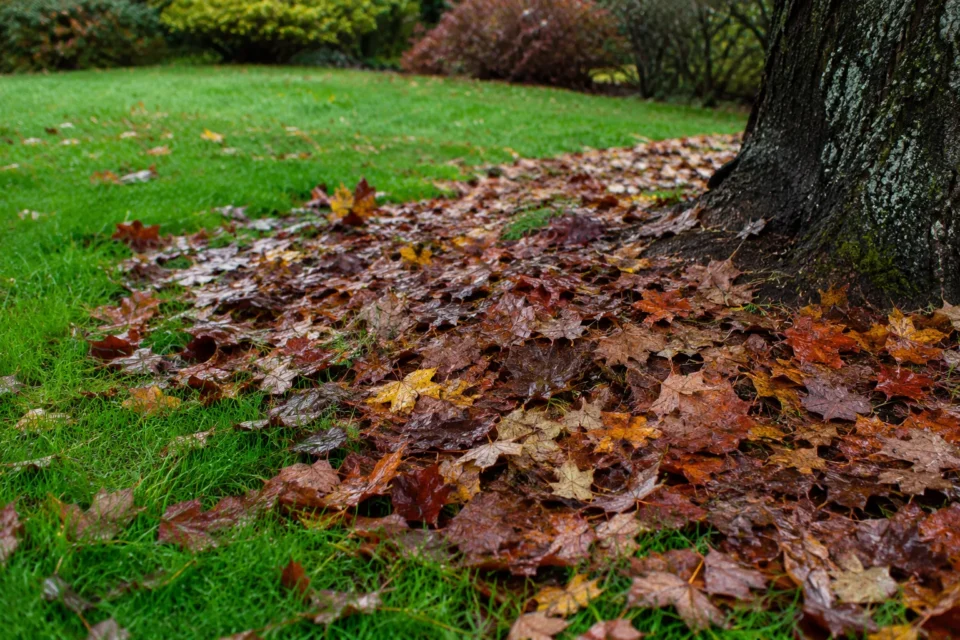
Unlike dry leaves, which are relatively light and loose, wet leaves tend to stick together. This creates dense mats that can interfere with normal lawn growth.
Here are some problems you may notice.
Reduced sunlight
Your grass needs sunlight to produce energy through photosynthesis. When wet leaves completely cover the turf, they prevent sunlight from reaching the blades.
This is especially concerning for grass growing beneath trees or near buildings, where sunlight is already limited.
Trapped moisture
Thick leaf coverage can keep grass damp long after rainfall ends.
While grass needs moisture, prolonged wetness can create conditions that favor certain fungal diseases.
Flattened and weakened grass
Wet leaves are heavier than dry ones. When they accumulate, they can press down on grass blades and prevent them from growing upright.
If this continues, the covered grass may become yellow, thin, or patchy.
Slower recovery
Grass that is already stressed by shade, poor drainage, or seasonal weather changes may have a harder time recovering from prolonged leaf coverage.
A few wet leaves scattered across your yard generally won’t create these problems. It’s the depth and duration of coverage that matter most.
Is It Better to Wait for Leaves to Dry?
In many situations, yes. Dry leaves are usually easier to collect, blow, rake, or mulch than wet ones.
Waiting for the lawn to dry can also reduce the risk of damaging soft soil and grass during cleanup.
Benefits of waiting for dry conditions
When leaves have dried:
- They separate more easily instead of sticking together.
- Leaf blowers can move them more efficiently.
- Rakes are less likely to drag heavy clumps across the grass.
- Mowers can shred them more evenly.
- Cleanup equipment is less likely to leave tracks in soft soil.
However, waiting isn’t always the right decision.
If your lawn is buried beneath thick, soggy leaves and another period of rain is approaching, delaying removal could prolong the conditions affecting the grass.
A practical approach is to consider both the leaves and the ground beneath them.
If leaves are wet but the soil is reasonably firm, careful removal may be possible. If the ground is saturated and equipment would leave ruts, it’s often better to avoid heavy machinery and use a gentler method when necessary.
How Long Can Wet Leaves Safely Stay on the Lawn?
There’s no exact number of hours or days that determines when wet leaves become harmful.
Some lawns can tolerate light leaf coverage through a rainy period without noticeable damage. Others may struggle sooner, particularly when thick layers cover newly established or already weakened turf.
Several factors influence how long wet leaves can remain.
Leaf depth: A thin scattering allows more sunlight and air movement than several inches of compacted leaves.
Weather conditions: Sunshine and wind help leaves dry. Continued rainfall and cloudy weather can keep them wet longer.
Grass condition: Healthy, established turf generally tolerates temporary stress better than thin, shaded, or newly seeded grass.
Time of year: Grass growth and recovery vary by species and season. Dormant or slow-growing turf may recover differently from actively growing grass.
Drainage: Areas that stay wet after rainfall may experience prolonged leaf moisture.
Instead of following a rigid cleanup schedule, inspect your lawn after significant rainfall.
If you can still see most of the grass through scattered leaves, removal may not be urgent.
If wet leaves have formed a solid covering that hides the turf, it’s worth addressing sooner rather than leaving the grass buried through additional wet weather.
Why Wet Leaves Are Harder to Mow or Mulch
Mulching fallen leaves with a mower can be an effective way to manage light leaf coverage. Small leaf pieces settle between grass blades and gradually decompose, contributing organic matter to the soil.
However, wet leaves don’t behave like dry leaves.
Wet leaves tend to clump together
Moisture causes leaves to stick together instead of breaking apart evenly.
These clumps may remain on top of the grass after mowing, creating the same coverage problem you were trying to prevent.
Mowers may become clogged
Wet leaves can accumulate beneath the mower deck or interfere with normal discharge.
This can reduce mowing performance and require additional cleaning.
Always turn off the mower and follow the manufacturer’s safety instructions before checking or clearing any blockage.
Wet soil is easier to damage
Operating heavy equipment on saturated ground can compact the soil or leave ruts.
Soil compaction reduces the space available for air and water movement around grass roots, potentially affecting long-term lawn health.
Mulching results may be uneven
Dry leaves generally shred into smaller, more manageable pieces. Wet leaves may remain in large clumps that don’t settle between grass blades.
For these reasons, it’s usually better to mulch leaves when conditions are reasonably dry.
If immediate removal is necessary, collecting the leaves rather than trying to mulch them may be a better choice.
Can Wet Leaves Increase Lawn Disease Risk?
Yes. Thick, wet leaf coverage can contribute to conditions that favor certain turfgrass diseases, particularly when moisture remains on grass blades for prolonged periods.
However, wet leaves don’t automatically mean your lawn will develop a fungal infection.
Disease development depends on the type of grass, the presence of disease-causing organisms, temperature, moisture, and other environmental conditions.
According to NC State Extension, prolonged leaf wetness can encourage diseases such as leaf spot and brown patch when other conditions are favorable.
Warning signs to watch for
After removing wet leaves, look for:
- Yellow or brown patches beneath heavily covered areas
- Matted grass that remains flattened
- Unusual spotting or discoloration on grass blades
- Areas that continue thinning after the leaves are cleared
- Patches that expand despite improved growing conditions
These symptoms aren’t proof of disease. They may also result from insufficient sunlight, drainage problems, or ordinary seasonal changes.
If the grass is simply flattened, it may recover after the leaves are removed.
If discoloration spreads or the turf continues deteriorating, a lawn assessment can help identify the cause before treatment is considered.
When Is Removing Wet Leaves More Important?
Sometimes protecting the grass is more important than waiting for ideal cleanup conditions.
Consider addressing wet leaves sooner in the following situations.
Thick layers completely cover the lawn
When the grass is no longer visible beneath compacted leaves, sunlight and air movement become limited.
Removing the excess coverage can help prevent prolonged stress.
More rain is expected
If another stretch of rainy weather is approaching, wet leaves may remain in place longer than anticipated.
Clearing heavy buildup before additional rainfall can reduce that risk.
The grass is newly seeded
New grass seedlings are especially vulnerable because they need light and suitable growing conditions to establish.
Wet leaf mats can interfere with seedling growth and make it difficult for young grass to develop.
Leaves collect in shaded areas
Grass beneath mature trees, fences, or buildings often dries more slowly.
When wet leaves accumulate in these areas, removing the heavier piles can improve conditions around the turf.
The lawn already shows signs of stress
Yellowing, thinning, or flattened grass may indicate that leaf coverage is becoming a problem.
Removing excess leaves allows you to inspect the affected area and determine whether additional care is needed.
Remember that immediate removal doesn’t always mean bringing a mower onto wet ground. Light raking or careful blowing may be more appropriate when soil conditions are soft.
When Professional Leaf Removal Makes Sense
Removing a small amount of wet leaves from a manageable yard may be straightforward.
However, larger properties or lawns with several mature trees can present more difficult conditions.
Professional leaf removal may be worth considering when:
- Your yard has extensive wet leaf buildup.
- Repeated rainfall prevents leaves from drying.
- Heavy piles collect around landscaping and narrow spaces.
- Your mower struggles with wet leaves.
- The ground is too soft for normal mowing.
- You need help removing and disposing of large volumes of debris.
Professional crews may have access to equipment designed to collect and transport substantial amounts of leaves more efficiently than standard residential tools.
They can also adjust the cleanup approach based on how wet the lawn is.
In some cases, that means waiting until the ground becomes firm enough for equipment. In others, it may mean carefully clearing specific areas before the rest of the yard dries.
The goal is to remove harmful leaf buildup without creating additional damage to the grass or soil.
How to Protect the Lawn During Fall Cleanup
Whether you’re handling wet leaves yourself or arranging cleanup, a few practical steps can help protect your grass.
1. Check soil conditions before starting
Walk across a small section of the lawn.
If the soil feels soft, your shoes sink, or footprints leave deep impressions, avoid bringing heavy equipment onto the area.
2. Start with the thickest leaf piles
You don’t need to remove every scattered leaf immediately.
Focus first on dense, compacted layers that completely cover the grass, especially in shaded areas.
3. Use gentle cleanup methods
Avoid aggressively scraping the lawn with a rake, particularly when the ground is wet.
Excessive force can pull up weakened grass or disturb newly established seedlings.
4. Wait before mowing saturated grass
Mowing wet turf can cause clumping and increase the risk of soil compaction.
If possible, allow the lawn to dry enough to support the mower without leaving tracks.
5. Avoid piling leaves over healthy grass
If you collect leaves into temporary piles, move them away from the turf rather than leaving them in place for an extended period.
6. Inspect the lawn afterward
Once the leaves are removed, check for flattened grass, discoloration, bare patches, and areas that remain unusually wet.
Avoid unnecessary watering while the soil is still saturated.
These simple precautions can help make fall cleanup more effective without placing extra stress on the lawn.
Leaf Removal in Matthews, NC
Fall weather in Matthews, NC, can bring periods of rainfall while leaves continue falling from trees across residential properties.
For homeowners with mature trees, this combination can create thick layers of wet leaves that are difficult to manage with ordinary lawn equipment.
At Performance Lawn & Landscape, we help homeowners maintain healthy, attractive lawns throughout the changing seasons.
Our team provides leaf removal services in Matthews and surrounding communities, helping manage seasonal leaf buildup before it creates additional problems for your turf.
We understand that every lawn is different. Some properties may only need occasional leaf removal, while others require more consistent attention during periods of heavy leaf fall.
Our lawn maintenance services can help you keep excess debris under control while protecting the grass and landscape beneath it.
Need help dealing with wet leaves?
Contact Performance Lawn & Landscape at 704-363-1499 to discuss your property and request a quote for seasonal leaf removal in Matthews, NC.
FAQs About Wet Leaves and Lawn Care
Should I rake wet leaves or wait until they dry?
If leaf coverage is light, waiting until the leaves dry usually makes raking easier. However, if thick, wet layers are covering the grass, carefully removing them sooner may help prevent damage. Avoid aggressive raking when the soil is saturated.
Can wet leaves kill grass overnight?
Wet leaves generally don’t kill healthy grass overnight. Damage is more likely when thick, compacted layers remain for an extended period. Grass already weakened by shade, disease, or poor growing conditions may be more vulnerable.
Is it okay to use a leaf blower on wet leaves?
Yes, but wet leaves are heavier and harder to move. A leaf blower may work on lightly damp leaves, while thick, soggy piles may require raking or specialized collection equipment. Avoid damaging soft turf during cleanup.
Can I mow over wet leaves?
It’s usually better to wait until the leaves and grass are reasonably dry. Wet leaves can clog mower decks, form clumps, and prevent even mulching. Mowing saturated ground can also compact soil and leave ruts.
Will wet leaves cause fungus in my lawn?
Wet leaves can create moisture conditions that favor certain fungal diseases, but they don’t automatically cause an infection. Disease depends on several factors, including weather, grass species, and lawn health.
What should I do if my grass turns yellow under wet leaves?
Remove the excess leaves and examine the grass. If the turf is still alive, it may recover as growing conditions improve. If yellowing spreads or bare patches develop, further evaluation may be necessary.
Wet leaves don’t always need to be removed immediately. When coverage is light and dry weather is approaching, waiting can make cleanup easier and protect your lawn from unnecessary equipment damage.
However, thick, soggy piles shouldn’t be ignored simply because they’re difficult to remove.
At Performance Lawn & Landscape, we help Matthews homeowners manage seasonal leaf buildup while keeping lawn health a priority. If wet leaves are becoming difficult to control, our team can help you choose a cleanup approach that works for your property.