
Fertilizer burns grass when excessive nutrients or concentrated fertilizer salts damage the roots or leaf blades. This often happens when too much fertilizer is applied, the product is spread unevenly, or the lawn is treated during hot, dry weather. Instead of encouraging healthy growth, fertilizer can leave yellow streaks, brown patches, or areas that appear completely dried out.
Understanding why fertilizer burns grass helps homeowners identify the problem and take appropriate recovery steps. At Performance Lawn & Landscape, we believe identifying the cause of lawn damage should always come before applying additional treatments.
What Does Fertilizer Burn Look Like?
Fertilizer burn usually appears as yellow, brown, or straw-colored areas in an otherwise green lawn. The affected grass may look dry, even when the surrounding turf receives enough moisture.
Common signs include:
- Yellowing grass blades: Grass loses its healthy green color and gradually turns yellow.
- Brown or scorched patches: Damaged sections appear dry and discolored.
- Brown leaf tips: The ends of individual grass blades become brown while lower portions remain green.
- Visible stripes: Yellow or brown lines develop where fertilizer was applied too heavily.
- Thinning grass: Severely damaged areas lose density as individual plants weaken or die.
These symptoms may appear within several days of fertilization, although the timing depends on the product, application rate, and weather.
The distribution of damage provides an important clue. If brown patches follow the path of a fertilizer spreader, an application problem becomes more likely.
However, discoloration alone does not confirm fertilizer burn. Drought, lawn diseases, and other environmental conditions can produce similar symptoms.
Why Can Too Much Fertilizer Damage Grass?
Grass needs nutrients such as nitrogen, phosphorus, and potassium for healthy growth. However, more fertilizer does not always produce a healthier lawn.
Many fertilizers contain soluble salts. When excessive amounts accumulate in the soil, they can interfere with the grass’s ability to absorb water.
This creates a situation where moisture may be present in the soil, but the grass cannot use it effectively.
As a result, the roots become stressed, leaf tissues lose moisture, and the grass begins to discolor.
Excessive fertilizer can also cause unusually rapid growth. This may weaken the lawn’s ability to handle environmental stress and increase its maintenance requirements.
Several application mistakes can contribute to fertilizer burn:
- Applying more product than the label recommends
- Fertilizing the same section multiple times
- Accidentally spilling concentrated fertilizer
- Reapplying fertilizer before the previous treatment has been properly assessed
- Using unsuitable products or application rates for the grass type
Quick-release nitrogen fertilizers can present a greater burn risk because their nutrients become available rapidly.
Even slow-release products can cause damage when used incorrectly.
The important distinction is that fertilizer burn results from excessive concentration or exposure, not simply from using fertilizer.
How Do Heat and Drought Increase the Risk of Fertilizer Burn?
Hot weather and dry soil can make fertilizer damage more likely.
During drought conditions, grass already struggles to obtain enough water. Its roots may be under stress, and growth often slows as the plant conserves moisture.
Adding concentrated fertilizer during these conditions can increase that stress.
High temperatures also accelerate water loss from grass blades and the surrounding soil. When soluble fertilizer salts are present in excessive concentrations, the grass has an even harder time maintaining adequate moisture.
For homeowners around Charlotte and Monroe, North Carolina, summer heat can create challenging conditions for lawn care.
Cool-season grasses, including tall fescue, may experience considerable stress during hot weather. Warm-season grasses such as bermudagrass can tolerate higher temperatures but are still vulnerable to improper fertilizer application.
Warning signs of weather-related stress include wilting, folded grass blades, and a dull blue-green appearance.
If the lawn is already showing these symptoms, its condition should be evaluated before fertilization.
Applying more nutrients will not correct an existing moisture problem.
Can Uneven Fertilizer Application Cause Brown or Yellow Patches?
Yes. Uneven fertilizer distribution is a common reason for isolated brown patches or yellow streaks.
A spreader that releases too much fertilizer in one location can expose that section to higher nutrient concentrations than the surrounding grass.
Overlapping application paths can also produce visible stripes.
For example, a homeowner may apply fertilizer across the lawn and accidentally cover the same narrow strip twice. That section receives a higher dose and may become discolored.
Other potential causes include:
- A spreader that has not been calibrated correctly
- Fertilizer collecting near turns or stopping points
- Granules spilling from a bag or spreader
- Applying fertilizer by hand without consistent distribution
The shape of the damage often helps identify the problem.
Straight lines, repeated bands, or concentrated patches near an application starting point may indicate uneven fertilizer coverage.
In contrast, areas that received too little fertilizer may remain pale green without showing actual burn damage.
These differences matter because the appropriate response depends on whether the grass received excessive fertilizer or insufficient nutrients.
Does Watering After Fertilization Help Prevent Damage?
Watering can help reduce fertilizer burn risk, but the correct approach depends on the product and lawn conditions.
Many granular fertilizers require irrigation after application to move nutrients from the grass blades into the soil.
Water can also help dissolve fertilizer granules and reduce concentrated residue sitting on the leaves.
However, not every fertilizer requires the same watering procedure.
Some products have specific instructions regarding irrigation timing, particularly combination products containing herbicides.
Homeowners should always follow the product label.
What If Too Much Fertilizer Was Applied?
If excessive fertilizer was recently applied, prompt action may reduce additional damage.
Visible piles of granules should be carefully collected before watering, rather than simply spreading them across the lawn.
Where appropriate, irrigation can help dilute soluble fertilizer concentrations and move some salts away from the immediate root zone.
However, excessive watering creates additional problems.
Waterlogged soil can restrict oxygen around the roots, while runoff can carry nutrients into storm drains and nearby waterways.
The safest watering approach depends on the severity of the application error, soil drainage, and existing moisture conditions.
How Can You Tell Fertilizer Burn From Lawn Disease?
Fertilizer burn and lawn disease can both cause brown patches, thinning turf, and yellow grass.
However, their underlying causes are different.
Fertilizer burn is generally associated with chemical or salt-related injury. Lawn diseases involve pathogens that infect and damage grass.
The following clues can help narrow down the cause:
| Clue | Fertilizer Burn | Lawn Disease |
| Timing | Often follows fertilization | May develop without recent fertilizer use |
| Pattern | Stripes, bands, or concentrated patches | Often irregular or circular patches |
| Conditions | Heavy applications, heat, dry soil | Varies by disease; many favor humid conditions |
| Progression | May stabilize once exposure ends | May continue spreading while conditions remain favorable |
| Treatment | Address excess fertilizer and turf stress | Identify the disease before considering treatment |
These patterns are useful indicators, not definitive diagnostic rules.
Some fungal diseases can also produce irregular patches or spread rapidly under favorable conditions.
Brown patch, for example, can affect lawns during warm, humid weather, particularly when leaf surfaces remain wet for extended periods.
Before applying a fungicide or another lawn treatment, consider recent fertilization, watering, mowing, and weather conditions.
A professional lawn evaluation may be necessary when the cause remains unclear.

What Should You Do If Your Lawn Has Fertilizer Burn?
The first priority is to prevent additional damage while determining whether the affected grass can recover.
1. Stop Additional Fertilizer Applications
Do not apply more fertilizer to make yellow grass turn green.
If excess nutrients caused the problem, additional applications could worsen the injury.
Allow the lawn’s condition to stabilize before considering further treatments.
2. Check for Remaining Fertilizer Granules
Inspect visibly damaged areas for concentrated fertilizer deposits.
If a recent spill left piles of granules, carefully remove the excess material without spreading it into nearby grass.
3. Evaluate Soil Moisture
Check whether the affected soil is dry, adequately moist, or saturated.
Appropriate watering may help reduce soluble salt concentrations, but excessive irrigation should be avoided.
The goal is to support root recovery without creating standing water or runoff.
4. Reduce Additional Lawn Stress
Avoid aggressive mowing, heavy foot traffic, and unnecessary lawn treatments while the grass is recovering.
Maintain a suitable mowing height for the turf species and avoid cutting away excessive leaf growth at once.
5. Monitor New Growth
Watch for fresh green shoots and changes in turf density.
New growth is a more useful recovery indicator than the color of already damaged leaves.
If the lawn continues declining, investigate other possible causes rather than assuming fertilizer burn is the only problem.
Can Fertilizer-Burned Grass Recover?
Yes. Grass can recover from fertilizer burn if enough of the roots, crowns, and growing points remain alive.
Mild cases may involve damage primarily to the leaf tips. These areas can improve as healthy new growth replaces the injured foliage.
Moderate damage may take several weeks to improve during favorable growing conditions.
Severe fertilizer burn can kill entire grass plants, particularly when concentrated salts cause extensive root damage.
Recovery depends on several factors:
- Severity and duration of fertilizer exposure
- Grass species and growth habits
- Soil moisture and drainage
- Air and soil temperatures
- Whether the lawn is actively growing
Bermudagrass and some other spreading grasses may gradually fill small damaged areas through lateral growth when their growing structures remain healthy.
Tall fescue generally has a more limited ability to spread into bare areas.
It is important to understand that brown grass blades do not turn green again once the tissue has died. Improvement occurs when healthy new growth replaces the damaged material.
Avoid making permanent repair decisions immediately after the first signs of discoloration. The extent of injury may become clearer as the lawn resumes growth.
When Does Damaged Turf Need Reseeding or Repair?
Reseeding or lawn repair may become necessary when fertilizer burn has killed the grass rather than temporarily damaged its foliage.
If an area remains bare and produces no healthy new growth during an appropriate growing period, natural recovery may be limited.
Before making repairs, evaluate:
- Whether living grass crowns or spreading stems remain
- The size and location of damaged areas
- Whether excessive fertilizer salts may still be present
- The type of grass growing in the lawn
- The best planting season for that grass
For tall fescue lawns in the Charlotte region, early fall is generally a favorable time for reseeding because cooler temperatures support establishment.
Warm-season grasses may be better repaired during their active growing season.
Larger damaged areas might require sod installation, seeding, or another appropriate restoration method.
However, replacing grass before correcting the underlying problem can result in repeated damage.
At Performance Lawn & Landscape, we consider the condition of the existing turf and its growing environment when determining whether maintenance or lawn restoration is appropriate.
How Can You Prevent Fertilizer Burn in the Future?
Preventing fertilizer burn begins with understanding the lawn’s needs rather than applying nutrients simply because the grass looks unhealthy.
Several practices can reduce the risk.
Use the correct application rate. Follow fertilizer label instructions and account for the actual lawn area.
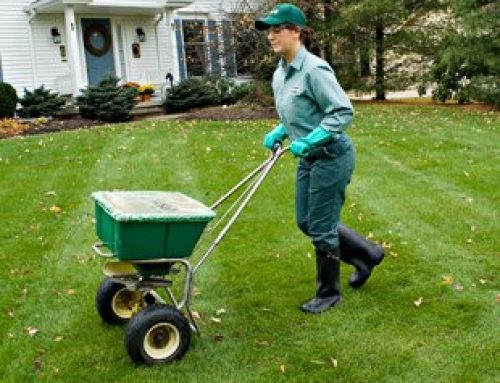
Check the spreader. Proper calibration and consistent walking speed help prevent excessive overlap or concentrated deposits.
Consider the weather. Avoid fertilizing severely drought-stressed lawns or applying treatments during unsuitable heat conditions.
Understand the grass species. Cool-season and warm-season lawns have different growth patterns and fertilization requirements.
Follow watering instructions. Apply irrigation according to the fertilizer label while avoiding unnecessary runoff.
Assess the soil. Soil testing can help identify nutrient needs and prevent unnecessary applications.
Most importantly, do not assume every yellow or brown patch indicates a nutrient deficiency.
A lawn can become discolored because of drought, disease, poor drainage, compaction, or mowing stress.
Identifying the problem first can prevent unnecessary treatment and additional turf damage.
FAQs
How quickly does fertilizer burn appear on grass?
Fertilizer burn can become visible within a few days, although timing varies with the fertilizer type, application amount, soil moisture, and weather conditions.
Will watering fix fertilizer-burned grass?
Watering may help dilute excess soluble fertilizer salts and reduce additional damage. However, it cannot restore dead grass tissue. Recovery depends on whether the grass’s growing points and roots remain healthy.
Should you fertilize again after fertilizer burn?
No. Avoid additional fertilizer until the cause of the damage has been identified and the lawn has recovered sufficiently. More fertilizer may worsen the problem.
Is fertilizer burn permanent?
Not always. Mild damage may recover through new growth. Severe injury can kill grass plants and leave bare areas that require reseeding or other repairs.
Can fertilizer burn happen with slow-release fertilizer?
Yes. Slow-release fertilizers generally have a lower immediate burn risk than many quick-release products, but excessive application can still damage grass.
Get Help Identifying Lawn Damage Before It Spreads
Yellow patches and brown grass do not always mean your lawn needs more fertilizer. Sometimes the problem is excessive nutrients, uneven application, or environmental stress that requires a different response.
At Performance Lawn & Landscape, we help homeowners and property managers throughout Charlotte, Monroe, Matthews, Waxhaw, and surrounding North Carolina communities maintain healthier lawns.
Our lawn care and landscape maintenance services include fertilization, mowing, aeration, seeding, and other services that support long-term turf health.
If your lawn has developed unusual discoloration after fertilization, identifying the cause is the first step toward choosing an appropriate solution.
Contact Performance Lawn & Landscape at 704-363-1499 to discuss your lawn’s condition and available maintenance or repair services.