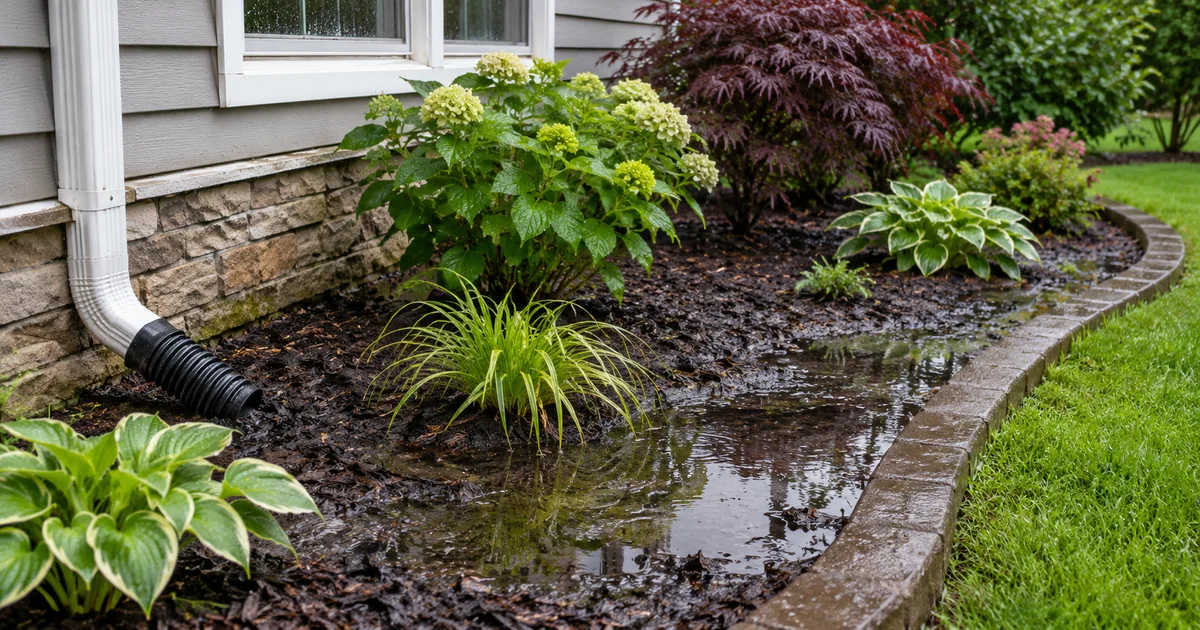
Rain is good for your landscape, but what happens when your planting beds stay soggy for days after a storm? You might notice standing water around shrubs, muddy soil beneath mulch, or plants that seem unhealthy despite getting plenty of moisture.
If your landscape beds stay wet after rain, the problem could involve more than the weather. Compacted soil, poor grading, irrigation overspray, and downspouts can all contribute to excess moisture.
Before adding more mulch or changing your watering schedule, it’s worth identifying where the water is coming from and why it isn’t draining properly.
Quick Answer: Why Do Landscape Beds Stay Wet After Rain?
Landscape beds stay wet after rain when water enters faster than the soil can absorb or drain it. Common causes include compacted soil, heavy clay, low spots, poor grading, irrigation overspray, and concentrated runoff from downspouts. Persistent saturation can damage plant roots, so the best solution depends on identifying the source of excess water.
How Poor Soil Drainage Keeps Beds Saturated
Soil plays a major role in how quickly water drains from landscape beds.
When rain falls, some water moves into the soil and fills the spaces between soil particles. Ideally, excess water continues moving downward while enough moisture remains available for plant roots.
However, not all soils drain at the same rate.
Clay-heavy soil holds water longer
Many properties in the Charlotte region have clay-rich soils, which can drain slowly depending on their structure and condition.
Clay particles are extremely small, creating tiny spaces through which water moves relatively slowly.
After heavy rainfall, these soils may remain saturated longer than sandy or well-structured loamy soils.
You might notice:
- Soil that feels sticky or muddy several days after rain
- Water collecting in planting holes
- Slow drainage beneath mulch
- Plants developing yellow or drooping leaves
- Persistent dampness even during otherwise dry weather
Clay soil isn’t automatically unsuitable for landscaping. Many plants grow successfully in clay when drainage and soil structure are appropriate.
Problems develop when water remains around the roots longer than the plants can tolerate.
Soil layers can also restrict drainage
Sometimes the upper soil drains reasonably well, but water encounters a dense layer underneath.
This may happen when construction activities leave compacted subsoil or when the property naturally contains slowly permeable layers.
Water can collect above that layer, leaving the planting bed saturated even when the surface appears relatively dry.
That’s why looking only at the top layer of mulch or soil may not reveal the full problem.
Can Compacted Soil Make Drainage Problems Worse?
Yes. Compaction can make an existing drainage problem significantly worse.
Healthy soil contains spaces that allow water and air to move around plant roots.
When soil becomes compacted, these spaces are reduced.
As a result, water may infiltrate more slowly, while plant roots have greater difficulty accessing the oxygen they need.
What causes soil compaction?
Several common activities can contribute:
- Repeated foot traffic through landscape beds
- Heavy equipment during home construction
- Vehicles driving over planting areas
- Working or walking on saturated soil
- Improper soil preparation before planting
Compaction is particularly common around recently constructed homes or properties where the ground was heavily disturbed.
How can you recognize compacted soil?
The soil may feel unusually hard when dry and become sticky or muddy when wet.
You might also notice water collecting on the surface rather than soaking in.
Plants may develop shallow or restricted root systems, leading to poor growth even when watering appears adequate.
Compacted soil doesn’t always require complete replacement. Depending on the severity, improvements to soil structure or preparation of the broader planting area may help.
However, aggressively digging around established trees and shrubs can damage their roots. Extensive soil work should account for existing plants and underground utilities.
How Irrigation Overspray Adds Too Much Water
Sometimes your landscape beds remain wet because they’re receiving more water than you realize.
Irrigation systems can unintentionally deliver water to planting areas that don’t need additional moisture.
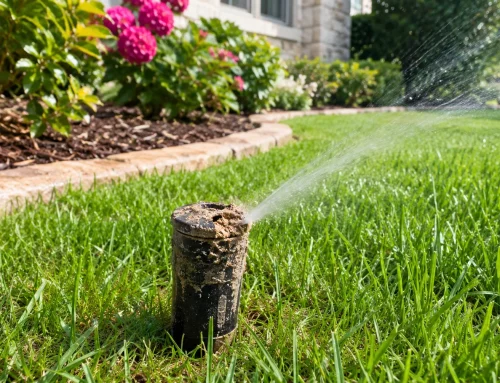
This is especially common when lawn sprinklers spray beyond the turf and into nearby shrub beds.
How overspray affects landscape beds
Imagine your lawn irrigation runs early in the morning.
Several sprinkler heads are positioned near the edge of a planting bed. Each time the system operates, water reaches the shrubs and surrounding mulch.
If the area also receives regular rainfall, the soil may never have enough time to dry between watering events.
Over time, this can create consistently saturated conditions.
Signs irrigation may be contributing
Watch for:
- Wet mulch even after several rain-free days
- Sprinkler heads spraying directly into planting beds
- Water pooling after scheduled irrigation cycles
- Soil that stays wet near certain sprinkler zones
- Plants showing stress despite frequent watering
Irrigation overspray isn’t the only possible issue.
Drip irrigation systems can also deliver excessive water if run too frequently or if an emitter or line is damaged.
Before making major changes, observe your irrigation system while it’s operating.
You may discover that a planting bed is receiving water from both its own irrigation and nearby lawn sprinklers.
Can Downspouts and Roof Runoff Flood Landscape Beds?
Absolutely. Downspouts are a common source of concentrated water around residential landscapes.
Your roof collects rainfall across a large surface area. Gutters direct that water toward downspouts, which release it at specific locations.
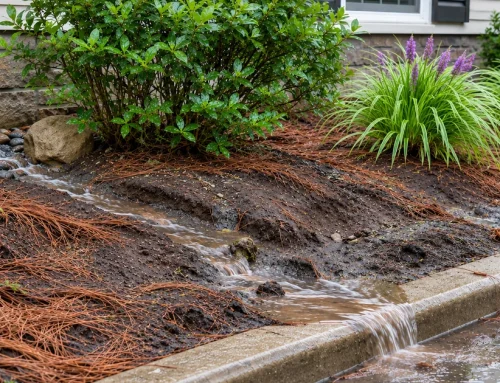
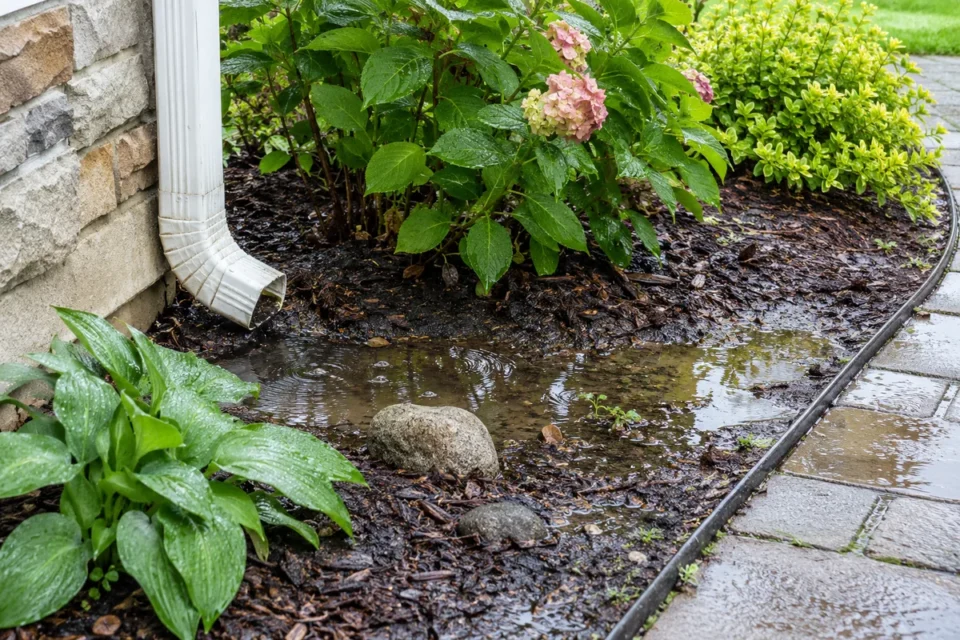
If the outlet empties directly into a planting bed, a substantial volume of water may enter a relatively small area during a storm.
Why downspouts create wet spots
The surrounding soil may not absorb the water quickly enough.
Instead, water collects near the discharge point or flows through the bed toward a low area.
Repeated exposure can leave the soil saturated and may contribute to erosion.
Warning signs near downspouts
Look for:
- Standing water beneath the discharge outlet
- Mulch pushed away from the downspout
- Exposed soil or small erosion channels
- Wet ground along the foundation
- Shrubs struggling near roof drainage outlets
These symptoms suggest that concentrated roof runoff may be contributing to the problem.
What can help?
Depending on the property, a properly positioned splash block, downspout extension, or other drainage improvement may help move water toward a suitable discharge area.
However, directing water away from one landscape bed shouldn’t create problems elsewhere.
Any changes should protect your home’s foundation and avoid concentrating runoff onto neighboring properties.
How Grading and Low Spots Affect Drainage
The shape of your yard influences where water collects after rainfall.
Even a small difference in elevation can cause runoff to flow toward a particular landscape bed.
If that bed sits lower than the surrounding lawn, sidewalk, or driveway, it may receive water from several directions.
Why low spots hold water
Water naturally moves downhill.
When it reaches a depression without an effective drainage outlet, it may collect until it infiltrates the soil or evaporates.
If the soil also drains slowly, the area can remain wet for an extended period.
Grading near the home matters
Landscape beds positioned beside foundations deserve particular attention.
Ground that slopes toward the house can direct runoff into planting areas near exterior walls.
Persistent moisture near the foundation may indicate a broader drainage concern that requires assessment.
How to identify drainage patterns
After rainfall, observe where water travels.
Look for:
- Water flowing from the lawn into planting beds
- Puddles forming in the same locations
- Mulch collecting along downhill edges
- Small channels in exposed soil
- Water remaining near walkways or foundations
These patterns can help distinguish a grading issue from a problem limited to soil texture.
If water repeatedly enters a bed from surrounding surfaces, changing the plants or mulch alone may not improve drainage.
What Problems Can Constantly Wet Beds Cause for Plants?
Plants need water, but their roots also need oxygen.
When soil remains saturated, water fills many of the spaces that normally contain air.
This limits oxygen availability and can interfere with normal root function.
Root stress and decline
Roots that remain in poorly aerated soil may struggle to absorb nutrients and support healthy growth.
Affected plants may develop yellowing leaves, weak growth, or premature leaf drop.
Increased root rot risk
Prolonged wetness can create conditions favorable to certain root-rot pathogens.
However, yellow leaves or wilting don’t automatically mean a plant has root rot.
Drought stress, nutrient deficiencies, and other problems can produce similar symptoms.
Wilting despite wet soil
This may seem surprising, but plants with damaged roots can wilt even when the surrounding soil is wet.
If roots cannot function properly, they may be unable to supply enough water to the leaves.
Adding more water in this situation could make the problem worse.
Poor plant establishment
Newly planted shrubs and flowers may be particularly vulnerable because their root systems are still developing.
If the planting hole remains saturated, roots may struggle to expand into the surrounding soil.
The severity depends on the plant species and how long the soil stays wet.
Some plants tolerate seasonal moisture, while others require well-drained conditions to remain healthy.
How to Tell Whether Irrigation or Drainage Is the Main Problem
Before changing anything, try to determine when the wetness occurs.
The timing and location of excess moisture often provide useful clues.
If the bed stays wet only after rainfall
Poor soil drainage, surface runoff, or low grading may be responsible.
Observe whether water collects immediately during rain or remains in the soil afterward.
If the bed is wet during dry weather
Check your irrigation system.
Look for overspray, leaking emitters, or watering schedules that run more frequently than necessary.
If the area remains wet despite the irrigation being off, an underground water leak or persistent groundwater issue may also need investigation.
If only one section stays wet
A localized issue may be involved, such as a downspout outlet, low spot, or compacted soil.
Compare that area with neighboring beds receiving similar rainfall.
If every bed drains slowly
Widespread soil conditions or site grading may be contributing.
However, different beds can have different soil structures, even on the same property.
A simple way to narrow down the cause
- Observe the beds immediately after rainfall.
- Check whether water flows into them from surrounding areas.
- Inspect downspouts and nearby paved surfaces.
- Watch your irrigation system during an operating cycle.
- Compare moisture conditions after several rain-free days.
For an unplanted area, a carefully performed soil drainage test may also help evaluate infiltration, although results should be interpreted alongside the site’s grading and soil conditions.
Avoid digging near underground utilities or established roots without appropriate precautions.
The objective is to identify whether excess water is being added, drainage is too slow, or both problems are occurring.
What Drainage Improvements Can Help?
The right improvement depends on what’s keeping the landscape bed saturated.
There isn’t one solution that works for every yard.
Improve soil conditions
Where compaction or poor soil structure is the primary issue, properly planned soil preparation may improve infiltration and root growth.
For new beds, preparing a larger planting area rather than amending only individual holes can help avoid abrupt differences in soil conditions.
Correct irrigation overspray
If sprinklers deliver unnecessary water to planting beds, adjusting coverage and scheduling may reduce excess moisture.
However, irrigation adjustments won’t solve a bed that receives significant runoff or has poorly draining soil.
Redirect downspout discharge
Concentrated roof runoff may need to be moved toward a suitable drainage location.
Proper extensions or other drainage features can help reduce water accumulation near planting beds.
Address low spots or grading
Where water collects because of the property’s slope, carefully planned grading adjustments may improve surface drainage.
These changes should account for nearby structures, existing plants, and neighboring properties.
Consider raised planting areas
In some locations, raised beds or slightly elevated planting areas can provide improved rooting conditions.
However, raising a bed doesn’t automatically correct the surrounding drainage.
Evaluate drainage systems
For persistent problems, a properly designed drainage solution may be appropriate.
Depending on site conditions, this could include a swale, subsurface drainage system, or another stormwater management feature.
These improvements should have a suitable discharge destination and should not move the problem to another part of the property.
Match plants to site conditions
Where moisture is naturally persistent and cannot reasonably be eliminated, selecting plants that tolerate wetter soil may be appropriate.
This should complement, not replace, necessary drainage corrections.
Landscape Drainage Help in Weddington, NC
Landscape beds in Weddington, NC, can experience drainage challenges when heavy rainfall combines with clay-rich soil, compacted planting areas, or runoff from surrounding surfaces.
For homeowners, persistent wetness can make it difficult to maintain healthy shrubs, flowers, and attractive planting beds.
At Performance Lawn & Landscape, we help residential and commercial property owners maintain landscapes throughout Weddington and surrounding communities.
Our team provides landscape maintenance, planting area preparation, and landscape design services that can help support healthier growing conditions.
If your landscape beds remain wet long after it rains, it’s important to identify whether the problem involves soil, irrigation, surface runoff, or the layout of the planting area.
We can discuss your property’s landscape needs and help determine whether maintenance adjustments, planting changes, or further drainage evaluation may be appropriate.
Learn more about our landscape design services and lawn care and maintenance services.
Dealing with soggy landscape beds in Weddington?
Contact Performance Lawn & Landscape at 704-363-1499 to discuss your landscaping concerns and request a quote.
FAQs About Wet Landscape Beds
How long should landscape beds stay wet after rain?
There is no fixed drying time. Soil texture, rainfall amount, shade, temperature, and drainage all affect how quickly beds dry. Moist soil is normal, but standing water or persistent saturation several days after ordinary rainfall may indicate a problem.
Why is my mulch still wet days after rainfall?
Mulch naturally retains moisture and slows evaporation. Shaded beds may also dry more slowly. However, if the soil beneath remains saturated or water is pooling, poor drainage or excess watering may be contributing.
Can clay soil cause standing water in landscape beds?
Yes. Clay-rich soil can drain slowly, especially when compacted or poorly structured. Water may collect on the surface or remain around plant roots. Improving soil structure or addressing drainage may help, depending on the site.
Should I stop watering my landscape beds if the soil is wet?
Avoid adding unnecessary water while the root zone remains saturated. Check soil moisture before irrigating. However, watering needs vary by plant species, establishment stage, and weather, so the schedule should reflect actual growing conditions.
Will adding more mulch help a wet landscape bed?
Not necessarily. Mulch helps regulate soil moisture, but additional material won’t correct poor grading, compacted soil, or concentrated runoff. Excessively deep mulch may also keep the root zone too wet or interfere with plant health.
Can poor drainage kill shrubs and flowers?
Yes. Prolonged saturation limits oxygen around roots and can increase the risk of root problems. Some plants tolerate wet conditions better than others, but persistent waterlogging can damage species that require well-drained soil.
Landscape beds that stay wet long after rainfall may be telling you something about your property’s soil, drainage, or irrigation.
Rather than guessing at the solution, pay attention to when water collects, where it comes from, and how long the soil remains saturated.
At Performance Lawn & Landscape, we help Weddington homeowners maintain landscapes that support healthy plants and attractive outdoor spaces. Contact our team to discuss your landscape conditions and the improvements that may be appropriate for your property.