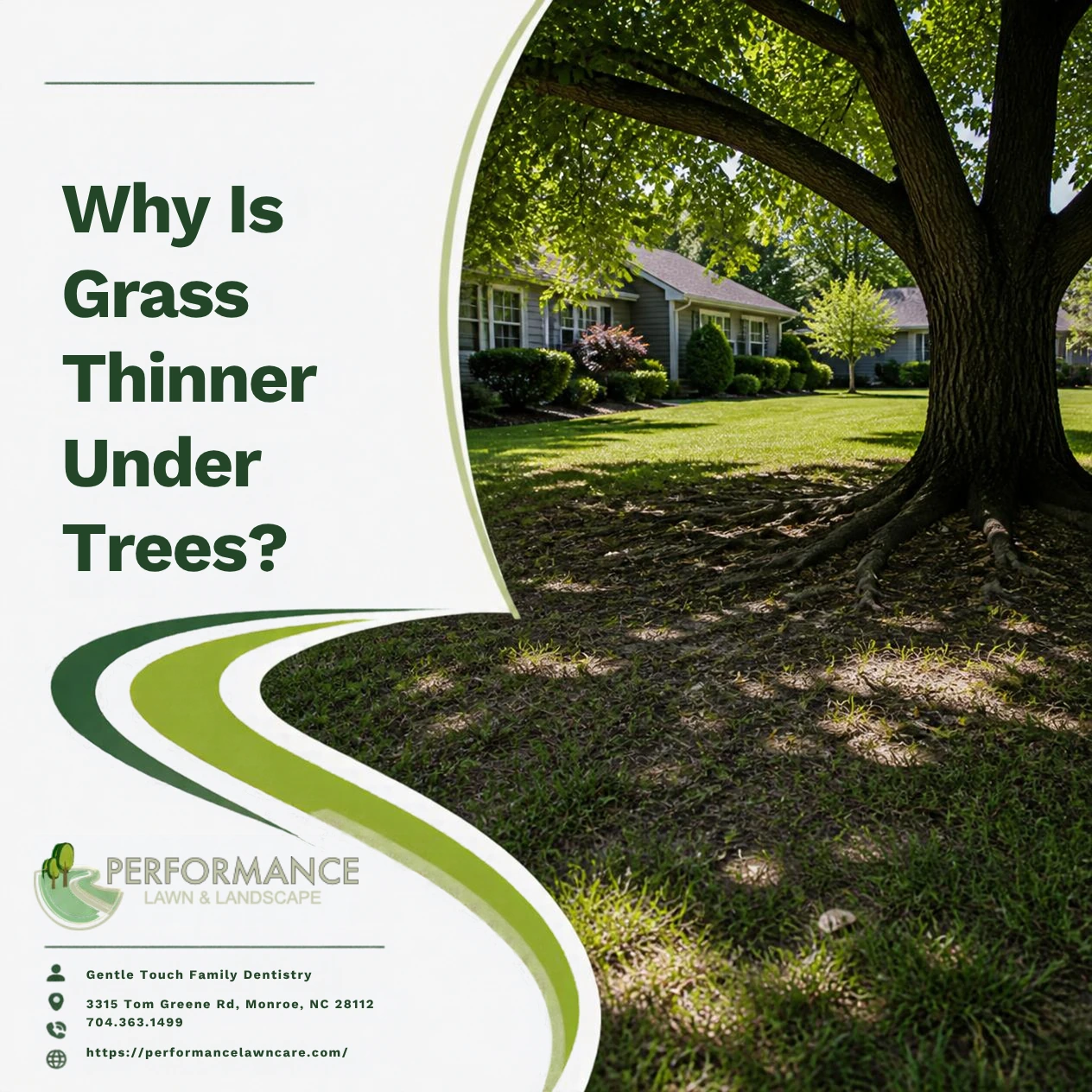
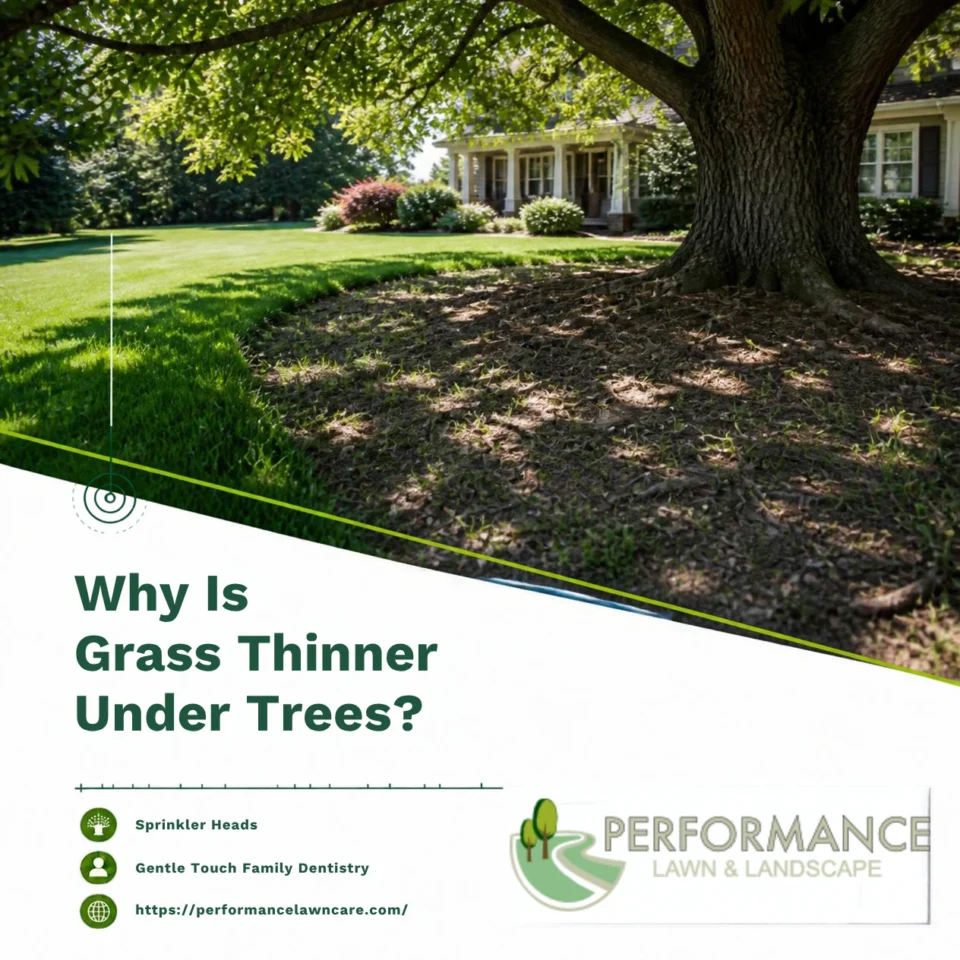
Grass is often thinner under trees because turf has to compete with the tree for sunlight, water, nutrients, and growing space. Dense shade, shallow tree roots, dry soil, and compaction can all make it difficult for grass to establish a strong root system.
If you are wondering why grass is thinner under trees, the problem is usually not caused by one factor alone. The most effective solution is to identify whether shade, root competition, moisture, soil conditions, or the grass variety is limiting growth before adding more seed, fertilizer, or water.
Why Is Grass Thinner Under Trees?
The area beneath a mature tree can be one of the most difficult parts of a lawn to maintain.
Even when grass grows well just beyond the canopy, turf directly under the tree may become:
- Thin
- Pale
- Patchy
- Slow-growing
- Easily damaged
- Bare in heavily shaded areas
Several environmental conditions overlap beneath trees.
First, branches and leaves reduce the amount of sunlight reaching the ground. At the same time, tree roots occupy much of the upper soil and compete with grass roots for moisture and nutrients.
Rainfall may also be intercepted by the canopy before it reaches the lawn.
The soil can become compacted from foot traffic, exposed roots, or years of limited turf growth.
Together, these conditions create an environment where grass is constantly competing for resources.
That is why repeatedly reseeding a shady spot often does not solve the problem unless the underlying conditions are improved.
How Does Shade Affect Grass Growth?
Grass depends on sunlight for photosynthesis.
When turf receives less light than it needs, it produces less energy and usually becomes weaker.
Shade can affect grass by causing:
- Slower growth
- Reduced density
- Thinner blades
- Weaker roots
- Greater susceptibility to traffic
- Poor recovery after stress
- Increased disease pressure
Not all shade is the same.
Light Shade
Some turf can tolerate several hours of filtered or indirect sunlight each day.
This may occur beneath trees with open canopies or along the edges of wooded areas.
Dense Shade
Grass usually struggles much more under dense tree canopies where very little direct or filtered light reaches the soil.
Even shade-tolerant turf still requires some light.
Moving Shade
Trees may create shade during only part of the day.
A lawn that receives several hours of morning sun may perform differently from one that remains shaded from sunrise to sunset.
Homeowners should observe the area throughout the day before deciding whether a new grass variety or another solution will work.
Shade also changes through the seasons as trees leaf out, grow, and are pruned.
How Do Tree Roots Compete With Grass?
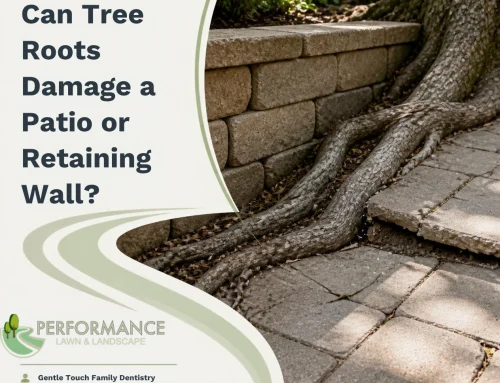
Tree roots and turf roots often occupy the same upper layers of soil.
That means they compete directly for:
- Water
- Nutrients
- Oxygen
- Physical growing space
Large trees usually have extensive root systems that extend well beyond the trunk.
Many of the fine roots responsible for taking up water and nutrients are relatively close to the soil surface, which is also where grass roots need to grow.
A mature tree has a major advantage in this competition.
Its root system is larger, more established, and capable of taking up significant amounts of moisture.
Grass trying to establish underneath may struggle to develop deep, healthy roots before resources become limited.
Homeowners sometimes respond by applying extra fertilizer beneath the tree.
That may not help.
If the main limitation is insufficient light or moisture competition, more fertilizer cannot correct the underlying problem. Excess fertilizer can also encourage weak top growth without improving root strength.
The same principle applies to watering.
Adding large amounts of water without understanding drainage and soil conditions may create disease or root problems rather than healthier turf.
Does Soil Stay Too Dry Under Trees?
It can.
Many homeowners assume shaded soil always stays moist, but areas beneath mature trees can actually become quite dry.
There are several reasons.
The Tree Uses Significant Water
A large root system can remove substantial moisture from the surrounding soil.
During hot weather, competition between turf and tree roots becomes even stronger.
The Canopy Intercepts Rainfall
Leaves and branches catch part of the rain before it reaches the ground.
Some water evaporates from the canopy, while other water is redirected toward the outer edge of the tree.
That can leave the area close to the trunk drier than expected.
Irrigation May Not Reach the Area Properly
Tree trunks, landscaping, and sprinkler placement can interfere with irrigation patterns.
A sprinkler may appear to cover the area while actually delivering limited water beneath the canopy.
Organic Matter May Be Limited
Compacted or poor soil may not retain moisture evenly.
When several of these conditions occur together, grass can become thin even though the area feels cool and shaded.
Before increasing irrigation, check the soil moisture at several depths and compare it with healthier parts of the lawn.
Can Compacted Soil Make the Problem Worse?
Yes.
Compaction can make a difficult growing environment even more challenging.
Compacted soil contains less open pore space, which reduces the movement of:
- Water
- Air
- Roots
- Nutrients
Grass roots may remain shallow and weak because they cannot easily penetrate the soil.
Compaction often develops under trees because these areas may be used for:
- Walking
- Children’s play
- Pet traffic
- Outdoor seating
- Equipment access
- Parking during projects
Exposed tree roots can also lead people to walk repeatedly in the same narrow spaces around the tree.
Signs of compaction include:
- Hard soil
- Water running off instead of soaking in
- Thin turf
- Bare paths
- Shallow rooting
- Standing water after rain
Aeration may help some compacted lawns, but work around mature tree roots should be approached carefully.
Aggressive digging, trenching, or cutting roots can damage the tree.
The goal should be to improve the lawn without disturbing major roots.
What Grass Types Perform Better in Shade?
Some grasses tolerate shade better than others, but no grass thrives without enough light.
For lawns in the Charlotte region, grass selection often depends on whether the property uses warm-season or cool-season turf.
Tall Fescue
Tall fescue is often considered one of the more shade-tolerant turf options for lawns that receive limited sunlight.
It can perform reasonably well with filtered light, especially when moisture and soil conditions are appropriate.
However, very dense shade can still cause thinning.
Fine Fescues
Fine fescues are known for shade tolerance and are used in some cooler-climate turf mixes.
Whether they are suitable depends on the site, local climate, and overall lawn-management approach.
Zoysiagrass
Some zoysiagrass varieties tolerate moderate shade better than many other warm-season grasses.
Performance still depends on receiving enough sunlight.
Bermudagrass
Bermudagrass generally prefers full sun.
It often becomes thin and weak under substantial tree canopy.
Centipedegrass
Centipede can tolerate some shade, but persistent heavy shade can still reduce density.
The important point is that “shade tolerant” does not mean “shade independent.”
A grass variety may survive with less light than another but still struggle beneath a dense canopy.
Can Pruning Improve Light for the Lawn?
Sometimes.
Selective pruning can increase the amount of filtered light reaching the grass, especially if the canopy is very dense.
However, trees should not be aggressively trimmed simply to grow more lawn.
Excessive canopy removal can stress the tree, affect its structure, and create unnecessary pruning wounds.
A professional tree service may be able to determine whether selective pruning would:
- Remove dead branches
- Improve canopy structure
- Increase filtered light
- Reduce excessive density
The goal should be better tree health and appropriate structure first, with improved lawn light as a possible secondary benefit.
Removing a large percentage of healthy canopy solely to support turf is usually not the best long-term solution.
Homeowners should also remember that trimming one season does not permanently solve shade. Tree canopies continue growing.
If the lawn requires aggressive pruning every year just to survive, that may be a sign the site is not suitable for turf.
When Should You Stop Trying to Grow Grass Under a Tree?
Sometimes the best lawn-care decision is to stop forcing grass to grow in an unsuitable location.
Consider another landscape approach if:
- The area receives very little sunlight
- Grass repeatedly dies after reseeding
- Tree roots dominate the soil surface
- Soil remains extremely dry
- Turf becomes muddy and bare
- Heavy foot traffic prevents recovery
- Tree health would be compromised by lawn improvements
- The area requires constant fertilizer or irrigation
- Grass remains thin despite proper care
Continuing to add seed every season can become expensive and frustrating when the environmental conditions have not changed.
A dense mature tree canopy may simply be more valuable than maintaining turf directly underneath it.
In those situations, creating a defined landscape bed can improve the appearance of the property while reducing competition around the tree.
What Are Good Alternatives to Turf Under Trees?
When grass consistently fails, several alternatives may work better.
Mulch
Mulch is one of the most practical solutions.
A properly mulched area can:
- Reduce mowing around roots
- Help conserve soil moisture
- Reduce competition from turf
- Create a cleaner landscape appearance
- Protect exposed roots from mower damage
Avoid piling mulch against the trunk.
A deep “mulch volcano” can hold moisture against the bark and contribute to tree-health problems.
Shade-Tolerant Groundcovers
Certain groundcovers can perform better than turf in filtered shade.
The right choice depends on local growing conditions, moisture, and maintenance preferences.
Landscape Beds
Expanding an existing bed around the tree can turn a struggling patch of lawn into an intentional feature.
Shade-tolerant ornamental plants may be incorporated where root disturbance can be minimized.
Natural Areas
On larger properties, allowing an area beneath mature trees to remain natural may be the simplest option.
Leaf litter and organic matter can also help protect soil around established trees.
Hardscape Carefully Placed Outside Major Roots
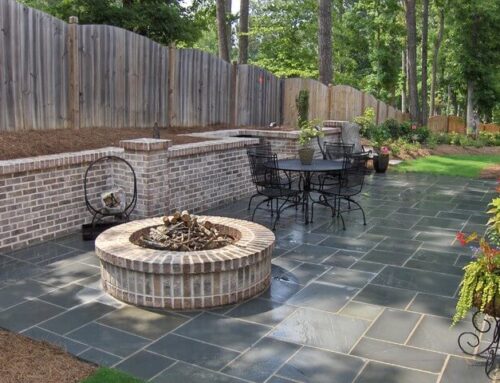
In some landscapes, pathways or seating areas may be appropriate, but construction around tree roots should be carefully planned to avoid damage.
The alternative should support both the appearance of the landscape and the health of the mature tree.
How Can You Improve Lawn Health Around Mature Trees?
When enough light reaches the area, several adjustments may help grass perform better.
Choose a More Shade-Tolerant Grass
If the existing turf is poorly suited to the site, overseeding or renovation with a more shade-tolerant variety may improve results.
Mow Slightly Higher
Allowing grass in shaded areas to maintain a little more leaf surface can help it capture available sunlight.
Avoid scalping turf under trees.
Reduce Foot Traffic
Shaded grass already grows more slowly and may recover poorly from repeated wear.
Redirecting walking paths can help.
Check Irrigation Coverage
Make sure the area receives adequate water without keeping the soil constantly saturated.
Improve Soil Carefully
A soil test can help identify pH or nutrient issues.
Avoid deep cultivation or aggressive digging around established roots.
Manage Leaf Buildup
Heavy layers of fallen leaves can block light and trap excessive moisture.
Remove thick leaf accumulation while avoiding unnecessary disturbance to exposed roots.
Avoid Overfertilizing
More fertilizer does not compensate for insufficient sunlight.
Apply nutrients based on turf needs and soil conditions rather than trying to force faster growth.
Protect Tree Roots
Do not cut, cover, or repeatedly damage major roots in an attempt to improve the lawn.
At Performance Lawn and Landscape, the goal is to evaluate why the turf is thinning before recommending a solution. The problem may involve shade, irrigation, soil compaction, grass selection, root competition, or several factors at the same time.
A site-specific approach can help determine whether improving the lawn is realistic or whether mulch, groundcover, or another landscape solution would perform better around the tree.
FAQs
Why does grass die directly underneath trees?
Grass beneath trees often receives too little sunlight while also competing with tree roots for water and nutrients. Compacted soil, leaf buildup, and poor irrigation coverage can make the problem worse.
Will adding more grass seed fix thin areas under trees?
Only if the site can support turf. If shade, root competition, or soil conditions are the main problem, additional seed may germinate and then thin out again.
Should I water grass under trees more often?
Not automatically. Check soil moisture and irrigation coverage first. Extra watering may help dry areas, but excessive moisture can create other problems.
Can I cut tree roots so grass will grow better?
Cutting major tree roots can damage or destabilize the tree. Root cutting should not be used simply to improve turf growth without professional guidance.
What grass grows best under shade trees?
Tall fescue and certain zoysiagrass varieties may tolerate partial shade better than some other common lawn grasses, but every turf type still needs adequate light.
Will trimming tree branches help grass grow?
Selective pruning may increase filtered light in some situations, but excessive canopy removal can harm the tree. Tree pruning should be based primarily on tree health and structure.
Is mulch better than grass under mature trees?
It often can be. When shade and root competition make turf difficult to maintain, mulch can reduce maintenance, protect exposed roots, and create a cleaner landscape appearance.
How do I know if the area is too shady for grass?
If turf repeatedly becomes thin or bare despite proper watering, soil care, and appropriate grass selection, the site may not receive enough light to support a healthy lawn.