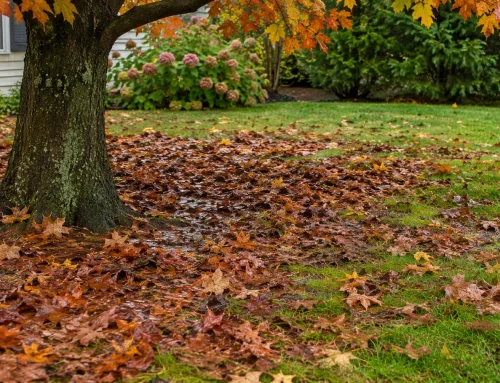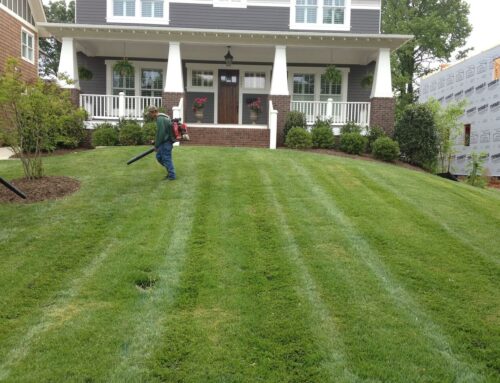
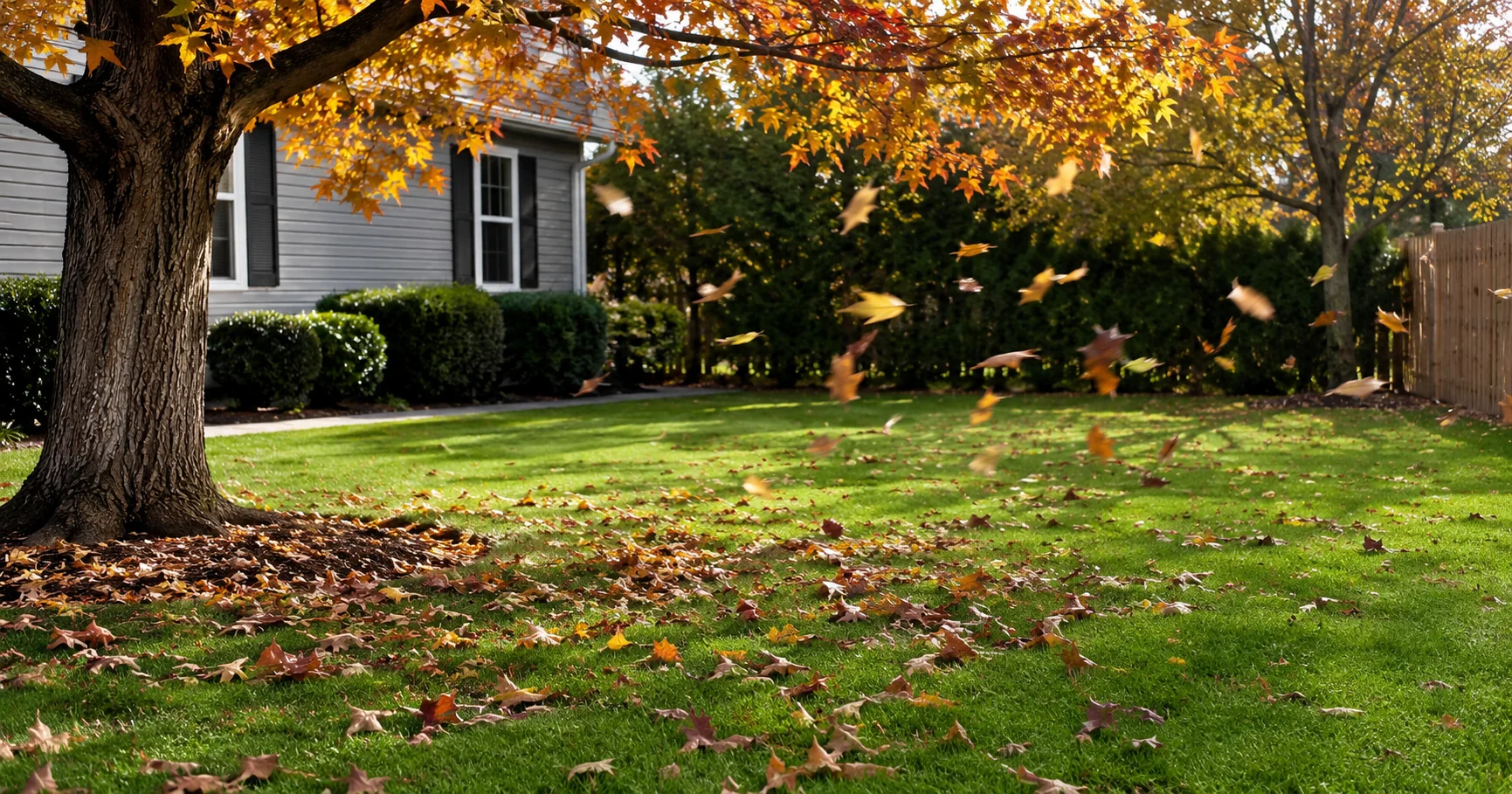
You spend the afternoon clearing leaves, and your yard finally looks clean. Then a windy day comes along, and suddenly, leaves are scattered across your grass again. It’s frustrating, especially when it feels like all your hard work has been undone.
If leaves keep blowing back into your yard after cleanup, you’re probably dealing with more than the trees on your own property. Wind direction, neighboring trees, fences, and even the layout of your landscaping can influence where leaves collect.
The solution isn’t necessarily cleaning more aggressively. It’s knowing where the leaves are coming from and choosing the right time and approach to manage them.
Quick Answer: Why Do Leaves Keep Coming Back?
Leaves keep blowing back into your yard because wind moves fallen leaves from nearby trees, neighboring properties, streets, and surrounding landscapes. Fences, corners, and planting beds can also trap windblown debris. During peak leaf drop, new leaves continue falling even after cleanup. Staged or recurring removal is often more effective than relying on one cleanup.
How Wind Patterns Move Leaves Across Properties
Wind is one of the biggest reasons your yard can look messy again shortly after cleaning.
Dry leaves are lightweight and can travel surprisingly far when wind speeds increase. They don’t necessarily fall directly beneath the tree they came from.
Instead, wind carries them across lawns, driveways, sidewalks, and neighboring properties until something stops their movement.
Wind direction affects where leaves collect
If your yard sits downwind from several trees, you may receive leaves from areas beyond your property.
A consistent breeze can gradually move leaves toward one side of your lawn. Stronger gusts may carry them across larger distances.
For example, you might notice that your front yard stays relatively clear while your backyard collects leaves along the fence.
That difference could be caused by the direction of the prevailing wind and the obstacles around your home.
Wind creates collection areas
Wind doesn’t move evenly through every part of a property.
Buildings, fences, trees, and landscape features can redirect airflow, creating places where leaves settle.
Common collection areas include:
- Corners between fences and buildings
- Areas behind shrubs and hedges
- Edges of patios and walkways
- Low spots in the lawn
- Spaces between landscape beds and fences
- Areas along the base of retaining walls
These locations often collect leaves repeatedly because the property’s layout naturally directs debris toward them.
If you notice leaves returning to the same spots after every windy day, those areas may be acting as natural collection points.
Can Neighboring Trees Keep Re-Filling Your Yard?
Absolutely. Leaves don’t follow property boundaries.
Even if your own trees have finished shedding, trees on neighboring properties may still be dropping leaves.
This is especially noticeable in neighborhoods with mature hardwood trees.
Different trees lose leaves at different times
Not every tree sheds its leaves at once.
Some species begin dropping leaves earlier in autumn, while others continue well into the season. Certain oaks may even retain dead leaves through part of winter.
That means your yard can remain exposed to falling leaves long after the trees closest to your house appear bare.
Nearby trees can contribute more leaves than expected
A large tree near your property line may shed leaves across several yards, depending on its canopy and wind conditions.
You may also receive leaves from trees lining nearby streets or common areas.
This doesn’t mean anyone is necessarily neglecting their property. Leaf movement is a normal part of seasonal weather.
Rather than focusing only on which property the leaves came from, consider where they consistently collect and how frequently those locations need attention.
A yard surrounded by mature trees will generally require a different cleanup approach than one with limited tree coverage.
Why Cleanup Timing Matters During Peak Leaf Drop
One reason homeowners feel like they’re constantly cleaning the yard is that they schedule a major cleanup before most leaves have finished falling.
Your property may look great immediately afterward, but there’s still plenty of material waiting to come down.
Early cleanup doesn’t stop new leaf fall
If trees still have most of their leaves, another round of buildup is likely.
A windy afternoon or passing storm can bring down a substantial amount of foliage in a short period.
Even a thorough cleanup cannot prevent that.
Weather can change your cleanup results
A calm, sunny day might seem perfect for removing leaves. However, if strong winds are expected the following day, debris from nearby properties could quickly return.
That doesn’t necessarily make the earlier cleanup unnecessary.
Removing heavy leaf coverage helps protect your grass, especially when leaves are beginning to form thick layers.
The key is recognizing that early-season cleanup is often temporary.
Late-season cleanup can provide longer-lasting results
Once most surrounding trees have dropped their leaves, a more thorough cleanup is less likely to be followed by another major accumulation.
However, waiting until every tree is bare isn’t always advisable.
Heavy leaf layers can block sunlight and weaken grass if left in place for too long.
For many properties, the better approach is to remove excessive buildup during the season and complete a more thorough cleanup after the heaviest leaf drop has passed.
How Fences, Beds, and Corners Trap Leaves
Have you noticed that certain parts of your yard seem to collect leaves no matter how often you clean them?
Your property’s physical features may explain why.
Fences act as barriers
When wind carries leaves across an open lawn, they continue moving until they encounter an obstacle.
A solid fence can stop that movement, causing leaves to accumulate along its base.
Fence corners are particularly common collection points because leaves can become trapped where two barriers meet.
Planting beds catch drifting leaves
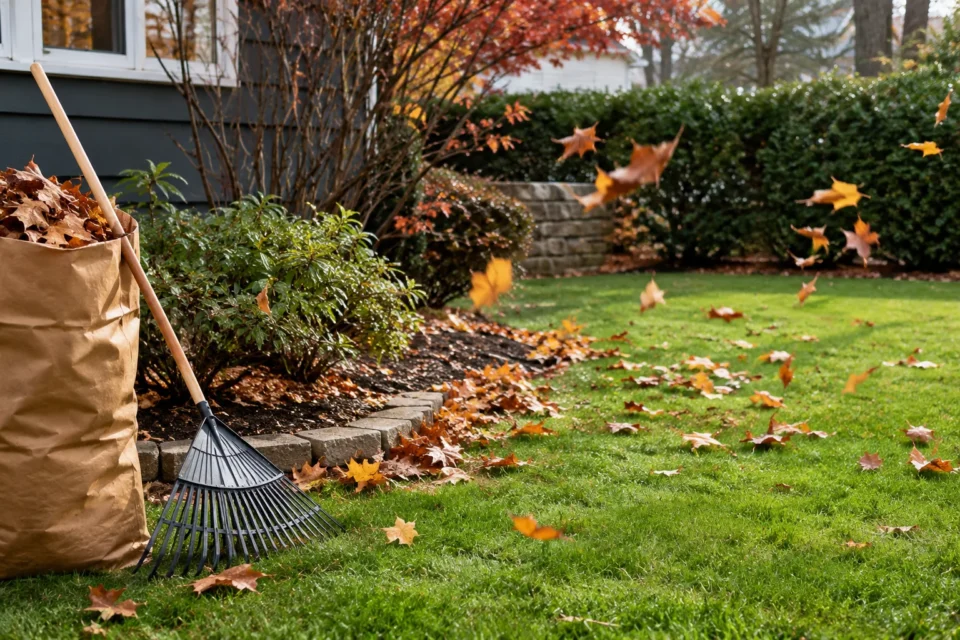
Flower beds and shrub borders can also collect windblown debris.
Low branches, dense plants, and uneven ground may prevent leaves from moving farther.
A small amount of leaf litter can benefit garden beds by providing organic matter and shelter for beneficial organisms.
However, excessive buildup may cover low-growing plants or create unwanted moisture conditions.
Corners can collect repeated buildup
The space between a garage and a fence, for example, may naturally catch leaves from several directions.
Cleaning that area once won’t change how wind moves across your property.
Identifying these collection points makes it easier to concentrate your maintenance efforts where they’re needed most.
Can Landscaping Features Make Leaf Buildup Worse?
Certain landscape designs can influence how much leaf debris collects and where it settles.
This doesn’t mean your landscaping is poorly designed. Many attractive landscape features naturally interrupt airflow.
Dense shrubs and hedges
Shrubs can catch leaves that would otherwise move across the yard.
Leaves may become lodged beneath branches or collect around the base of plants.
Retaining walls
Retaining walls create changes in elevation and interrupt wind movement.
Leaves may settle along the wall or collect in corners where the wall meets another structure.
Decorative edging
Landscape edging helps separate planting beds from grass, but raised borders can also prevent leaves from blowing away.
This may create narrow strips of debris along bed edges.
Low areas and drainage channels
Leaves can move downhill with runoff during rainfall.
Low spots and drainage paths may collect debris even when wind isn’t the main cause.
If these areas repeatedly fill with leaves, their placement may explain the pattern.
You don’t need to redesign your entire landscape to address the problem. Often, identifying the collection points and adjusting your cleanup routine is enough.
Should You Clean Up Leaves All at Once or in Stages?
For most properties with ongoing leaf fall, cleaning in stages is more practical than waiting for one major cleanup.
However, the best approach depends on how many trees surround your yard and how quickly leaves accumulate.
When staged cleanup works better
Staged cleanup involves removing excess leaves periodically throughout the season.
This approach makes sense when:
- Several trees continue shedding leaves.
- Wind regularly carries debris onto your property.
- Thick piles accumulate in the same locations.
- Your grass becomes covered between cleanup sessions.
- Rain causes fallen leaves to become wet and compacted.
Rather than clearing every scattered leaf, focus on areas where buildup could affect lawn health or create slippery walking surfaces.
When a single cleanup may be enough
A property with few surrounding trees and limited wind exposure may only need one thorough cleanup after most leaves have fallen.
This is more practical when leaf coverage remains light enough that it isn’t smothering the grass.
Why a combined approach often works
Many homeowners benefit from a combination of occasional cleanup during peak leaf drop and a final, more thorough visit toward the end of the season.
This prevents leaves from accumulating excessively without requiring the lawn to remain completely leaf-free every day.
When Recurring Leaf Removal Makes More Sense
Sometimes, repeated leaf buildup is simply part of maintaining a property with substantial tree coverage.
If leaves return after every windy day, scheduling recurring service may be more manageable than arranging separate cleanups whenever the lawn becomes messy.
Recurring leaf removal can be particularly helpful for properties with:
- Multiple mature trees nearby
- Large lawn areas
- Frequent windblown debris
- Fences and landscape beds that trap leaves
- Heavy seasonal leaf accumulation
- Limited time for routine outdoor maintenance
The appropriate frequency varies.
Some yards may benefit from weekly attention during peak leaf drop, while others only need occasional visits based on weather and accumulation.
The objective isn’t to guarantee that leaves won’t return. It’s to prevent excessive buildup from remaining on the lawn for too long.
Recurring service also makes it easier to address trouble spots before leaves become wet, compacted, or difficult to remove.
How Landscape Maintenance Can Reduce Repeat Buildup
You can’t control the wind or prevent neighboring trees from losing their leaves.
However, routine landscape maintenance can make recurring leaf buildup easier to manage.
Keep grass at an appropriate height
Maintaining grass at a suitable height for its species supports healthy turf.
Healthy grass is generally better equipped to tolerate seasonal stresses, including temporary leaf coverage.
Avoid cutting grass excessively short simply to make leaves easier to collect.
Maintain shrubs and planting beds
Regular shrub trimming can improve access to areas where leaves become trapped.
It also makes it easier to inspect planting beds and remove unwanted accumulations without disturbing plants.
Mulch light leaf coverage when appropriate
Not every leaf needs to be collected and hauled away.
Small amounts can be shredded with a mulching mower, allowing the pieces to settle between grass blades and gradually decompose.
According to North Carolina Cooperative Extension, mulching leaves is a practical way to manage moderate leaf fall while returning organic matter to the lawn.
Avoid leaving thick clumps of shredded leaves that completely cover the grass.
Monitor recurring collection points
After windy weather, check the locations where leaves typically gather.
Clearing these smaller areas periodically may be easier than allowing several weeks of debris to accumulate.
Consider a seasonal maintenance schedule
If your yard consistently collects leaves throughout autumn, including leaf management in your seasonal maintenance plan may help keep the workload manageable.
The goal is to maintain healthy grass and an attractive landscape without repeatedly starting from scratch after every windy day.
Leaf Removal in Stallings, NC
Homeowners in Stallings, NC, may find themselves dealing with more than the leaves falling from their own trees.
In residential neighborhoods with mature trees, seasonal winds can carry leaves across property lines, into fenced yards, and around landscape beds.
Even after a thorough cleanup, another windy day can bring fresh debris.
At Performance Lawn & Landscape, we help Stallings homeowners manage seasonal leaf buildup through dependable lawn care and landscape maintenance services.
We know that every property has different conditions. Some yards collect leaves along fences, while others experience repeated buildup beneath large trees or around planting beds.
Our team can help identify the areas needing the most attention and provide leaf removal suited to your property’s seasonal needs.
Whether you’re dealing with recurring leaf accumulation or need help managing a yard surrounded by mature trees, we’re here to help.
Explore our leaf removal services or learn more about our landscape maintenance services.
Tired of cleaning up the same leaves again and again?
Contact Performance Lawn & Landscape at 704-363-1499 to discuss leaf removal in Stallings, NC, and request a quote for your property.
FAQs About Leaves Returning After Cleanup
Why do leaves keep blowing into my yard from other properties?
Wind carries lightweight leaves across property boundaries. Trees on neighboring properties, nearby streets, and common areas can all contribute debris. The direction of the wind and your yard’s layout determine where those leaves eventually collect.
How can I keep leaves from blowing back into my yard?
You can’t completely prevent windblown leaves, but you can reduce repeated buildup by clearing collection points, maintaining shrubs, and scheduling cleanup during peak leaf fall. Avoid blowing leaves into streets or neighboring properties.
Is it better to wait until all the leaves have fallen?
Not always. Waiting may reduce the number of major cleanups needed, but thick leaf coverage can weaken grass. Remove excessive buildup during the season, then schedule a more thorough cleanup once most trees have finished shedding.
Do fences help stop leaves from entering a yard?
Fences may block some windblown leaves, but they often cause debris to accumulate along their base or in corners. Their effectiveness depends on fence design, wind direction, and surrounding landscaping.
How often should I schedule leaf removal during fall?
It depends on tree coverage, weather, and how quickly leaves collect. Properties with several mature trees may need weekly or periodic cleanup during heavy leaf fall, while yards with fewer trees may require less frequent attention.
Can leaves blowing back into my yard damage the grass?
Yes, if they accumulate in thick layers and remain for extended periods. Heavy leaf coverage can block sunlight and trap moisture, potentially weakening turf. A few scattered leaves generally won’t cause significant damage.
If leaves keep blowing back into your yard after cleanup, it doesn’t necessarily mean you’re doing anything wrong. Wind, surrounding trees, and property layout can make repeated leaf accumulation unavoidable during autumn.
Instead of trying to maintain a completely leaf-free yard throughout the season, focus on preventing heavy buildup and scheduling cleanup when it will make the most difference.
At Performance Lawn & Landscape, we help Stallings homeowners keep seasonal leaf accumulation under control while protecting their lawns. Contact our team to discuss a practical maintenance approach for your property.