Pine needles are a popular choice for landscape beds because they provide a natural appearance, help retain soil moisture, and protect the ground around plants. But after a heavy rain, you might find pine straw scattered across your lawn, washed onto the driveway, or piled up at the bottom of a slope.
If your pine needles keep washing out of landscape beds, the problem may have less to do with the material itself and more to do with how water moves through your yard.
Slopes, drainage patterns, installation depth, and edging can all affect how well pine straw stays in place. Identifying what’s causing the movement can help you avoid repeatedly replacing material after every storm.
Quick Answer: Why Do Pine Needles Wash Out of Beds?
Pine needles wash out of landscape beds when rainwater runoff becomes strong enough to carry the material downhill or across the soil. Sloped beds, concentrated drainage, downspouts, inadequate edging, and uneven installation can contribute to the problem. Improving water flow and proper pine straw coverage is usually more effective than simply adding more needles.
How Slope and Runoff Move Pine Needles
The slope of your landscape bed plays a major role in how well pine straw stays in place.
On relatively flat ground, rainwater has more opportunities to soak into the soil. On a slope, water naturally moves downhill, potentially carrying loose material with it.
The steeper the slope, the faster runoff may travel, especially during intense rainfall.
Why pine straw moves downhill
Pine needles are lightweight, but their long, thin shape allows them to overlap and interlock. This makes pine straw a useful mulch for many sloped planting beds.
However, that interlocking structure has limits.
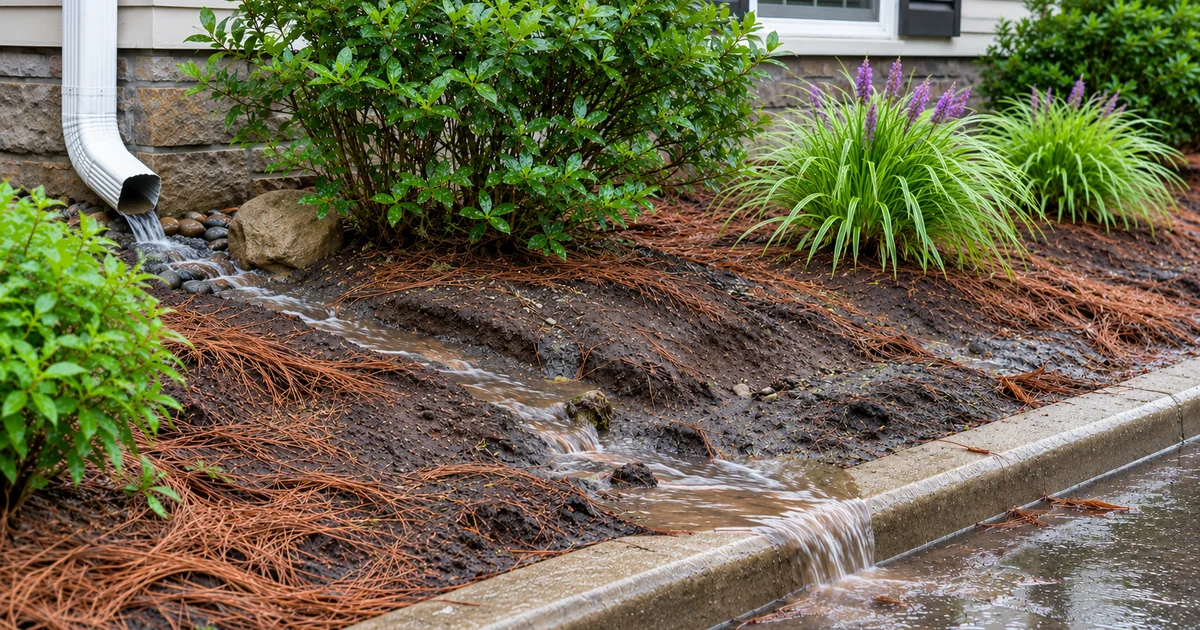
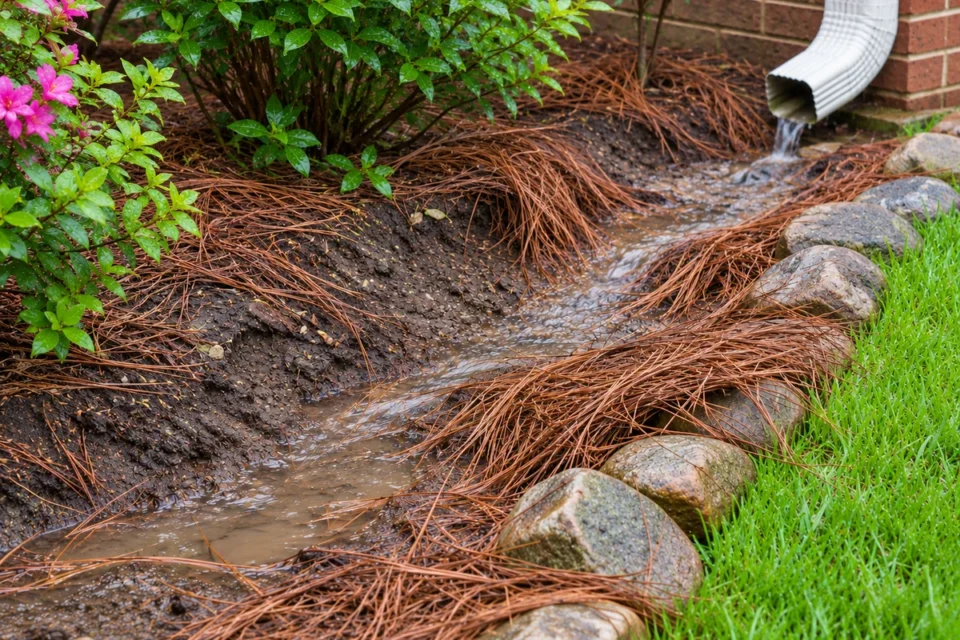
When concentrated runoff flows through a bed, it can lift or push sections of pine straw downhill.
You might notice:
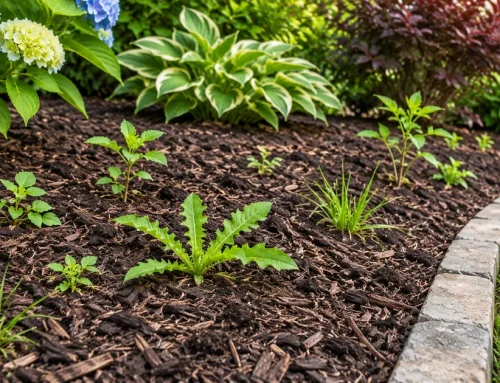
- Thin patches forming near the top of the bed
- Pine needles collecting along the lower edge
- Exposed soil where water has traveled
- Small channels running through the mulch
- Needles washing onto nearby sidewalks or driveways
These patterns can help identify the direction of water movement.
Not every slope causes washout
A gently sloped landscape bed with well-distributed pine straw may hold up well during ordinary rainfall.
Problems are more likely when water enters the bed in concentrated streams instead of spreading evenly across the surface.
This is why two beds with similar slopes can perform very differently during the same storm.
Can Heavy Rain Cause Pine Straw to Shift?
Yes. Heavy rainfall can move pine straw even when it was installed correctly.Why Pine Needles Wash Out of Garden Beds & How to Fix
During light rain, water often filters through the needles and into the soil.
However, when rainfall becomes more intense than the ground can absorb, excess water begins flowing across the surface.
This runoff can carry loose needles along with soil and other landscape debris.
Rainfall intensity matters
A brief, intense downpour may produce more runoff than a longer period of gentle rain.
If the soil is already saturated from previous rainfall, even moderate rain may cause water to move across landscape beds.
Water can create channels
As runoff travels through a bed, it may follow the same path repeatedly.
Over time, small channels can develop where pine straw is frequently displaced.
If you notice needles washing away from the same narrow section after every storm, the issue may be concentrated drainage rather than insufficient material.
Replacing the pine straw might temporarily restore the appearance, but the problem can return during the next heavy rain.
Does Installation Depth Affect Retention?
Yes. The amount of pine straw applied can influence how well it covers the soil and stays in place.
Pine straw that’s spread too thinly may not form a consistent, overlapping layer.
Without enough material to interlock, individual needles can move more easily during wind or rain.
However, adding excessive amounts isn’t the answer either.
What happens when pine straw is too thin?
A sparse layer may leave soil exposed, allowing raindrops to strike the surface directly.
This can contribute to soil erosion and make the remaining pine needles easier to displace.
Thin coverage may also provide less moisture retention and weed suppression.
Can too much pine straw cause problems?
Excessive pine straw can create bulky, uneven piles, particularly on slopes.
Loosely installed material may shift or bunch up if runoff moves beneath or through it.
Deep piles can also cover plant crowns or collect against tree trunks, which isn’t desirable for plant health.
What is the right depth?
For many landscape beds, a pine straw layer of approximately 2 to 3 inches is a practical starting point, depending on the plants and site conditions.
North Carolina State Extension recommends this general depth for pine needle mulch in ornamental planting beds.
The goal is to create consistent coverage without excessive piling.
Keep material away from plant crowns and tree trunks, and avoid covering the root flare of trees.
Remember that the correct depth improves coverage, but it won’t stop powerful runoff from moving through a poorly drained bed.
How Bed Edging Helps Keep Pine Needles in Place
Landscape edging creates a physical boundary between planting beds and surrounding areas.
When installed appropriately, edging can help prevent pine straw from drifting onto lawns, sidewalks, or driveways.
Common edging materials include:
- Natural stone
- Landscape bricks
- Concrete edging
- Metal landscape edging
- Flexible landscape borders
Each material provides a different appearance and level of containment.
Edging works best for minor movement
If pine needles are gradually shifting across a flat bed, a defined border may help keep them contained.
This is especially useful along lawn edges where normal maintenance can disturb loose material.
Edging cannot solve every runoff problem
If a large volume of water flows downhill through the bed, pine straw may wash over the edging.
Poorly planned borders can also trap water, creating drainage issues behind the barrier.
For sloped beds, edging should be considered alongside water movement and drainage.
A border that holds pine straw in place but causes water to collect against your home isn’t a good solution.
The objective is to contain the material while allowing stormwater to move safely through the landscape.
Can Downspouts Wash Pine Needles Out?
Absolutely. Downspouts are one of the first things to inspect when pine straw repeatedly washes away near your house.
Your roof collects rainfall across a large surface area. Gutters then direct that water toward downspouts, where it exits in a concentrated flow.
If the downspout empties directly into a landscape bed, the force of the water may displace pine needles.
Signs your downspout may be responsible
Look for:
- A bare patch directly beneath the downspout outlet
- Pine straw pushed outward in a fan-shaped pattern
- Soil erosion near the foundation
- Needles collecting at the lower end of the bed
- Water channels extending away from the house
These patterns can suggest that concentrated roof runoff is contributing to the problem.
How to reduce downspout-related washout
Depending on your property, possible solutions include installing a properly sized splash block, extending the downspout, or directing water toward an appropriate drainage area.
The goal is to reduce the force of water striking the pine straw.
However, downspout adjustments must also protect your foundation and avoid sending runoff toward neighboring properties.
If the discharge area is already saturated or eroding, drainage improvements may be necessary before replacing the pine needles.
Why Bare Soil and Compacted Beds Can Make the Problem Worse
The condition of the soil beneath your pine straw is another important factor.
Healthy soil with suitable structure allows water to infiltrate more effectively.
Compacted soil, on the other hand, can make it harder for water to soak into the ground.
Compacted soil increases surface runoff
Soil can become compacted through repeated foot traffic, equipment use, or construction activity.
When soil particles are pressed tightly together, water infiltration may decrease.
During heavy rain, more water can remain on the surface and move through the landscape bed.
If the bed is sloped, that runoff can carry pine straw downhill.
Bare soil is more vulnerable to erosion
Pine straw normally helps protect soil from the direct impact of falling raindrops.
When large sections of soil are exposed, rainfall can loosen and carry away soil particles.
As erosion develops, the ground may become uneven, making it harder for pine needles to remain consistently distributed.
Why replacing pine straw may not be enough
If the underlying soil has drainage or erosion problems, adding a fresh layer may only provide temporary improvement.
The more effective approach is to address the water movement and soil conditions contributing to the washout.
How to Improve Pine Needle Retention
If your landscape beds repeatedly lose pine straw after rainfall, start by identifying where the material moves and what is causing it.
A few targeted adjustments can make a noticeable difference.
1. Follow the runoff path
After a storm, inspect where pine needles have collected and where soil is exposed.
Look for channels, low spots, and areas where water enters the bed.
These clues can help reveal the source of the problem.
2. Correct uneven coverage
Spread pine straw consistently across the bed rather than leaving thin sections and excessive piles.
On appropriate slopes, longer pine needles can interlock to create more stable coverage.
3. Improve bed edging where needed
Install or maintain edging along areas where loose needles regularly escape.
Make sure the border doesn’t obstruct necessary drainage or cause water to collect near structures.
4. Check downspouts and irrigation
Make sure downspouts aren’t releasing concentrated water directly onto vulnerable sections of the bed.
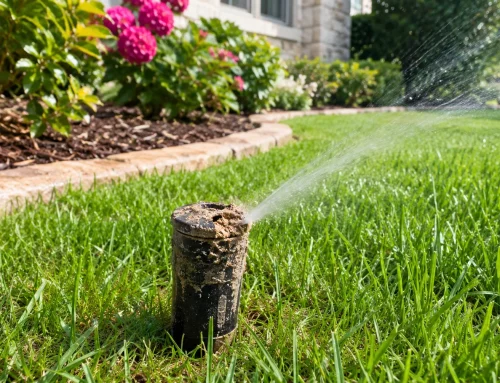
Inspect irrigation heads for overspray or excessive watering that creates surface runoff.
5. Protect exposed soil
Where erosion has already removed soil, the bed may need stabilization before pine straw is replaced.
Suitable plantings, soil improvements, or other erosion-control measures may be appropriate depending on the location.
6. Address drainage problems first
If water repeatedly flows through the same section, correcting that flow should take priority.
Otherwise, even carefully installed pine straw may wash away during the next storm.
The best results usually come from combining proper pine straw coverage with appropriate drainage and bed design.
When Landscape Design Changes May Help
Sometimes pine straw washout is a sign that the landscape bed needs more than routine maintenance.
This is particularly true when a bed sits on a steep slope or receives substantial runoff from surrounding surfaces.
In these situations, modifying the landscape design may provide a longer-lasting solution.
Adjusting the slope
Minor grading changes may help redirect water away from vulnerable sections or distribute runoff more evenly.
However, grading should be planned carefully to avoid creating drainage problems elsewhere.
Adding suitable groundcover plants
Established groundcover plants can help stabilize soil through their root systems.
For sloped areas, a combination of appropriate plants and mulch may provide better protection than loose material alone.
Plant selection should account for sunlight, soil moisture, and maintenance requirements.
Creating terraces or retaining structures
Steeper landscape beds may benefit from terracing or properly designed retaining features that reduce the distance water travels downhill.
These improvements require careful planning, particularly where drainage or structural stability is involved.
Installing stormwater management features
Depending on site conditions, swales, rain gardens, or other drainage improvements may help slow runoff and encourage infiltration.
Not every yard needs these changes.
However, if pine straw repeatedly washes away despite proper installation and edging, it may be worth evaluating the landscape as a whole.
Pine Needling in Monroe, NC
Heavy rainfall can be challenging for landscape beds, particularly those located on slopes or near roof drainage outlets.
Here in Monroe, NC, homeowners may notice pine straw washing onto lawns, sidewalks, and driveways after periods of intense rain.
At Performance Lawn & Landscape, we help residential and commercial property owners maintain attractive, functional landscapes throughout the changing seasons.
Our team provides pine needling services in Monroe, NC, along with landscape maintenance and design services.
If your pine needles repeatedly shift or wash out, it’s important to consider more than simply replacing the missing material.
We can help you evaluate your landscape maintenance needs and discuss whether pine straw installation, edging improvements, or broader landscape adjustments may be appropriate.
We understand that well-maintained landscape beds should do more than look attractive. They should also support plant health, protect exposed soil, and work with the conditions of your property.
Need help with pine straw that won’t stay in place?
Contact Performance Lawn & Landscape at 704-363-1499 to discuss pine needling in Monroe, NC, and request a quote for your property.
FAQs About Pine Needles Washing Out of Beds
Why does my pine straw wash away every time it rains?
Repeated washout often indicates concentrated runoff, sloped terrain, inadequate edging, or poor drainage. If pine straw disappears from the same location after every storm, follow the water’s path to identify the underlying cause.
Is pine straw good for sloped landscape beds?
Yes. Pine needles naturally overlap and interlock, making them useful for many sloped beds. However, steep slopes or concentrated runoff can still displace them. Proper installation and drainage are important for long-term retention.
How thick should pine needles be in landscape beds?
A layer of approximately 2 to 3 inches is generally appropriate for many ornamental landscape beds. Coverage should be consistent without piling needles against plant stems, crowns, or tree trunks. The ideal depth depends on the planting and site conditions.
Will landscape edging stop pine needles from washing away?
Edging can reduce minor movement and help contain pine straw along bed borders. However, it may not prevent washout caused by strong runoff. Drainage improvements may also be necessary, especially on slopes.
Should I add more pine straw after every heavy rain?
Not automatically. If pine straw keeps washing away, identify the cause before replacing it. Adding more material without correcting concentrated runoff or drainage problems may lead to repeated losses.
Can I use rocks to keep pine straw in place?
Rocks or stone edging may help contain pine straw in certain locations. However, placing rocks directly in a runoff channel can redirect water or create new erosion problems. The solution should match the drainage conditions and landscape design.
Pine needles washing out of landscape beds can be frustrating, especially when you’ve recently refreshed your landscaping. While pine straw provides useful soil protection, it can’t overcome every drainage or slope problem.
Before adding another layer, look at where the water is coming from, how it moves through the bed, and whether the installation provides adequate coverage.
At Performance Lawn & Landscape, we help Monroe homeowners maintain landscape beds that look attractive and perform well through changing weather conditions. Contact our team to discuss pine needling and landscape care for your property.