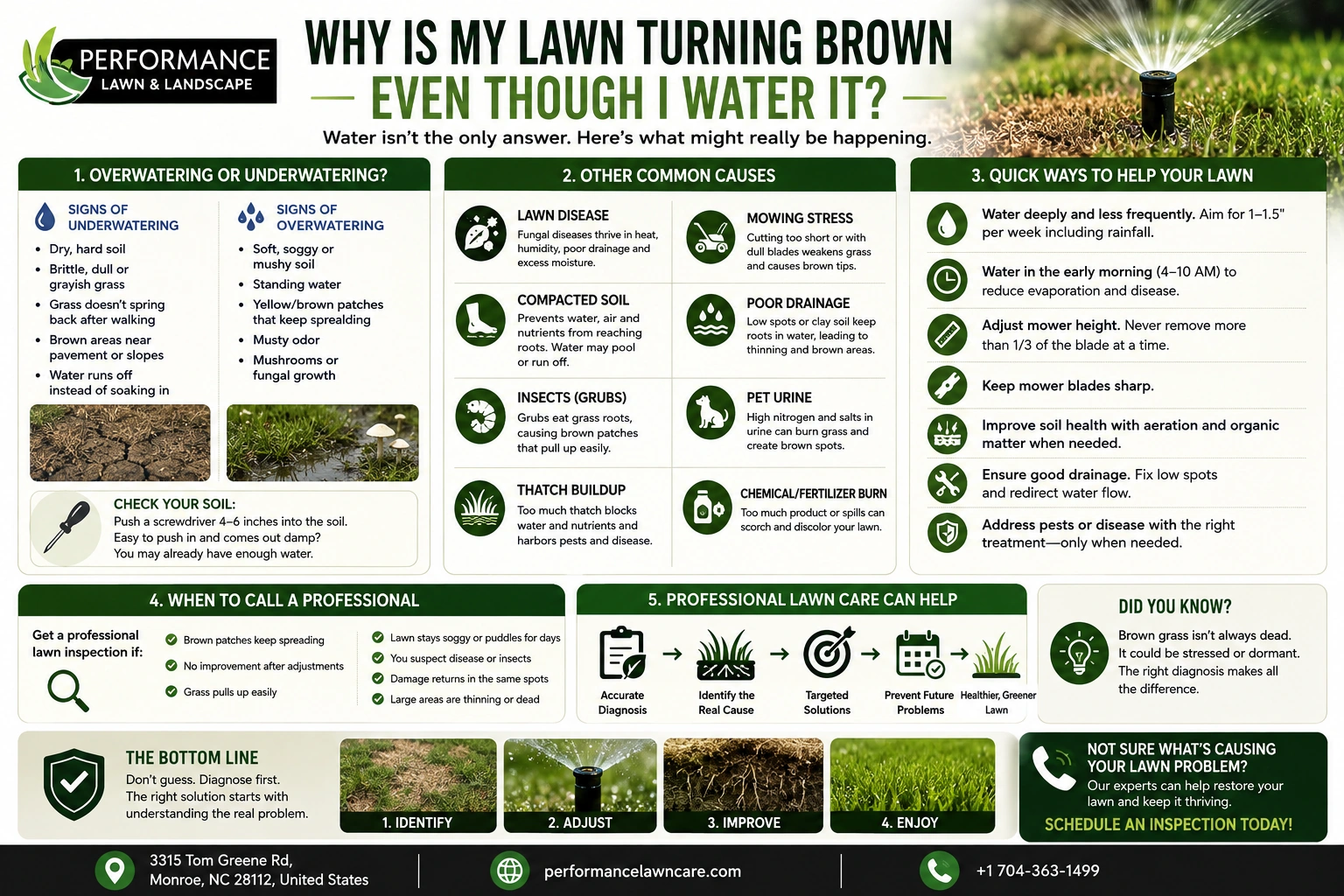
Seeing brown patches in a lawn can be frustrating, especially when you have been watering regularly. It is natural to assume that dry-looking grass simply needs more water, but that is not always the case. In fact, adding more water without identifying the real problem can sometimes make the damage worse.
A lawn may turn brown because it is receiving too little water, too much water, or water at the wrong time. Brown grass can also result from fungal disease, compacted soil, poor drainage, damaged roots, insects, mowing stress, pet urine, or seasonal dormancy.
The appearance of the brown area can provide useful clues. Dry, brittle grass may suggest drought stress, while soft soil and spreading patches may point to excess moisture or disease. Grass that pulls up easily may have damaged roots, and sharply defined spots may be related to pet activity or chemical exposure.
The best response is not always to increase irrigation. Homeowners should first look at the soil, watering pattern, mowing habits, drainage, and shape of the affected areas. When discoloration continues to spread or does not improve after basic adjustments, a professional lawn inspection can help determine what is happening beneath the surface.
Why Is My Lawn Turning Brown Even Though I Water It?
Water is only one part of lawn health. Grass also needs healthy roots, appropriate soil conditions, sunlight, nutrients, airflow, and proper mowing. When one of these factors is out of balance, a lawn can turn brown even when the irrigation system appears to be working.
One common issue is uneven watering. A sprinkler may run regularly without delivering the same amount of water to every part of the yard. Misaligned sprinkler heads, clogged nozzles, low water pressure, wind, slopes, and nearby landscaping can leave certain areas dry while others become saturated.
Watering frequency also matters. Light watering every day may keep the surface damp but fail to reach deeper roots. This encourages shallow root growth, leaving the lawn more vulnerable to heat and drought. On the other hand, repeatedly soaking already-wet soil can limit oxygen around the roots and create favorable conditions for fungal growth.
Brown areas may also be unrelated to irrigation. Common warning signs include:
- Circular or irregular brown patches
- Yellowing around the edges of damaged areas
- Grass blades that look spotted or discolored
- Turf that feels loose or pulls up easily
- Soil that remains wet long after watering
- Hard, dry soil that resists a screwdriver
- Thinning grass in heavily traveled areas
- Brown spots that return in the same location
- Damage that spreads despite additional watering
Because several lawn problems can look similar, it is important to consider the entire pattern instead of judging the grass by color alone.
Is It Overwatering or Underwatering?
Both overwatering and underwatering can cause grass to turn brown. The symptoms may look similar from a distance, but the condition of the soil and roots can help homeowners tell the difference.
Signs of Underwatering
A lawn that is not receiving enough moisture may lose its green color and become dull, grayish, or brown. Grass blades may curl inward, feel dry, or remain flattened after someone walks across the yard.
Other signs can include:
- Dry, hard soil
- Cracks in exposed ground
- Brittle grass blades
- Slow recovery after foot traffic
- Brown areas near pavement or sunny slopes
- Water running off instead of soaking in
- A screwdriver being difficult to push into the soil
Runoff does not always mean the lawn has received enough water. Compacted or extremely dry soil may repel water, causing it to flow toward sidewalks, driveways, or lower areas before reaching the root zone.
Watering deeply and less frequently is often more beneficial than brief daily watering, although the correct schedule depends on the grass type, soil, weather, shade, and local restrictions.
Signs of Overwatering
Too much water can reduce the oxygen available to grass roots. Constantly wet soil may weaken the root system, encourage shallow growth, and create conditions where disease-causing fungi can spread.
Possible signs of overwatering include:
- Soft, muddy, or spongy soil
- Standing water
- Persistent runoff
- Mushy or decaying grass
- A musty odor
- Increased weeds that prefer wet soil
- Mushrooms or other fungal growth
- Yellow or brown patches that continue spreading
- Footprints that leave deep impressions
Overwatered grass may still look dry or stressed because damaged roots cannot absorb moisture efficiently. Adding even more water does not solve that problem.
Check Moisture Below the Surface
The top of the soil can dry quickly while deeper soil remains moist. Before running the sprinklers again, check the soil a few inches below the surface.
A long screwdriver can provide a simple indication. If it enters the soil easily and comes out damp, the root zone may already have enough moisture. If the ground is hard and the tool barely penetrates, the lawn may be too dry or compacted.
Homeowners can also place several empty, straight-sided containers around the lawn during a watering cycle. Comparing the amount collected in each container may reveal uneven sprinkler coverage.
Could Lawn Diseases or Root Problems Be the Cause?
When brown grass does not improve after watering adjustments, the problem may involve disease or damage to the root system.
Fungal Lawn Diseases
Fungal diseases often develop when moisture, temperature, and grass conditions create a favorable environment. Overwatering, nighttime irrigation, poor drainage, excessive thatch, and heavy fertilization may increase the risk of certain diseases.
Symptoms vary depending on the disease and grass type, but homeowners may notice:
- Circular brown patches
- Rings of damaged or discolored grass
- Yellow, tan, or reddish grass blades
- Spots or lesions on individual blades
- Cotton-like growth early in the morning
- Patches that expand during humid weather
- Grass that appears greasy, matted, or wilted
Applying more water to a fungal problem may accelerate its spread. Treatments should not be applied based on appearance alone because drought stress, insect damage, and disease can create similar patterns.
Compacted Soil
Compacted soil makes it difficult for water, oxygen, and nutrients to reach the roots. It may develop in areas with heavy foot traffic, parked equipment, construction activity, dense clay soil, or repeated mowing along the same path.
Grass growing in compacted soil may appear thin, weak, or brown even when it receives regular irrigation. Water may pool on the surface or run away instead of soaking into the ground.
Core aeration may help relieve compaction in some lawns, but the timing and method should be appropriate for the grass variety and local growing season.
Shallow or Damaged Roots
Healthy grass depends on a strong root system. Roots may become shallow because of frequent light watering, overly wet soil, compacted ground, excessive thatch, or mowing too short.
Root damage may also occur because of:
- Construction or grading work
- Chemical spills
- Excessive fertilizer
- Soil erosion
- Tree root competition
- Poor drainage
- Insect feeding
- Repeated heat stress
If grass can be lifted easily from the soil, the roots may have been damaged or eaten.
Grubs and Other Insects
Grubs are the larvae of certain beetles. They live in the soil and may feed on grass roots. When root damage becomes severe, sections of turf can turn brown and pull away from the ground like loose carpet.
Other signs of grub activity may include:
- Irregular brown patches
- Spongy turf
- Grass that pulls up with little resistance
- Birds or animals digging in the lawn
- Visible white larvae in the soil
Not every brown lawn has grubs. Insect treatments should be based on confirmed activity rather than assumption, since unnecessary pesticide applications may not help and can affect beneficial organisms.
How Mowing Height Can Stress Your Lawn
Mowing too short is a common cause of lawn stress. This practice is often called scalping.
Grass blades produce energy through photosynthesis. When too much of the blade is removed at once, the plant has less surface area to produce the energy needed for root growth and recovery. Short grass also exposes more soil to direct sunlight, which increases evaporation and soil temperature.
A scalped lawn may show:
- Brown or pale areas after mowing
- Visible stems or soil
- Thinning turf
- Increased weeds
- Slow recovery during hot weather
- Damage on uneven sections of the yard
- Greater sensitivity to drought
Removing more than roughly one-third of the grass blade at a time can place unnecessary stress on the lawn. The ideal mowing height varies by grass species, so homeowners should identify the turf type before setting the mower.
Dull mower blades can create additional problems. Instead of making a clean cut, they tear the grass, leaving frayed tips that may turn brown. Torn blades may also be more vulnerable to disease.
During periods of heat or drought, keeping the grass slightly taller can help shade the soil and support deeper roots. Mowing should also be avoided when the lawn is extremely wet, since equipment can compact the ground and damage soft turf.
Other Reasons Grass May Turn Brown
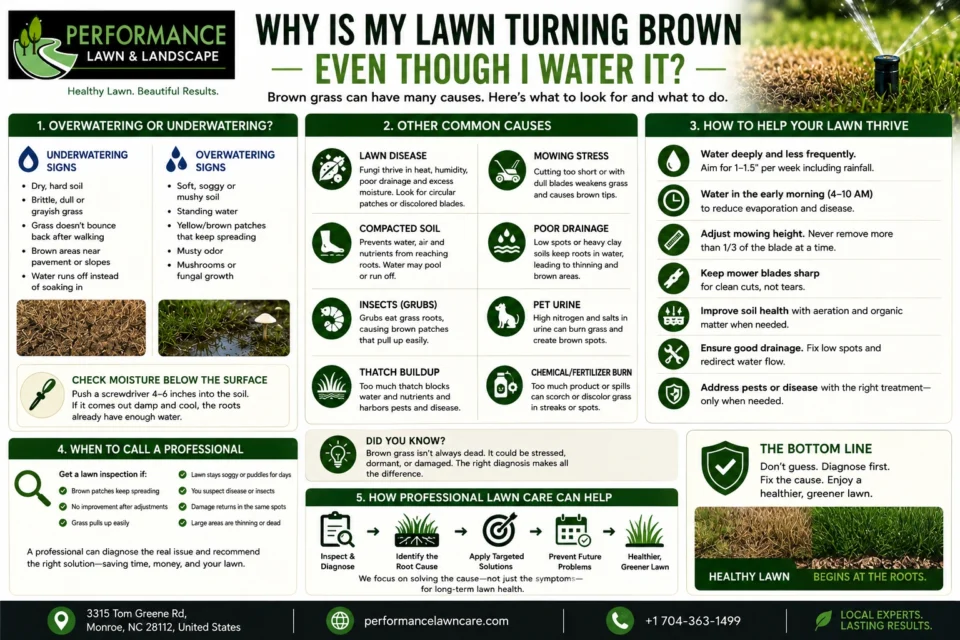
Watering problems, disease, and mowing stress are common causes, but several other conditions can affect lawn color.
Seasonal Dormancy
Some grasses naturally enter dormancy during periods of heat, drought, or cold. Dormant grass may turn tan or brown while the roots and crown remain alive.
Warm-season grasses often lose color during cool weather, while cool-season grasses may go dormant during prolonged summer heat. Dormancy is a survival response and does not necessarily mean the lawn is dead.
A lawn care professional can help distinguish normal seasonal dormancy from disease or permanent damage.
Poor Drainage
Low areas, heavy clay soil, damaged grading, and blocked drainage routes can keep parts of a yard saturated. Grass growing in these locations may thin, yellow, or turn brown because the roots lack oxygen.
Persistent puddles may also increase disease activity and attract moisture-loving weeds.
Pet Damage
Dog urine contains nitrogen and salts. Concentrated exposure may burn the grass, creating small brown spots that are sometimes surrounded by darker green growth.
These spots often appear in locations where the pet repeatedly urinates. Watering the area soon after exposure may help dilute the concentration, but repeated damage may require changes in pet habits or lawn management.
Fertilizer or Chemical Burn
Applying too much fertilizer can damage grass and produce yellow or brown streaks. Spilled products may create sharply defined dead areas.
Herbicides, fuel, cleaning solutions, ice-melting products, and other chemicals can also injure turf. Brown lines near driveways or application paths may suggest a spill or uneven treatment.
Excessive Thatch
Thatch is a layer of partly decomposed stems, roots, and organic material between the green grass and soil. A small amount can be beneficial, but an excessive layer may interfere with water movement and provide a favorable environment for pests and disease.
Water may remain near the surface rather than reaching the root zone, causing the lawn to develop shallow roots.
Heat Reflected From Hard Surfaces
Grass near driveways, sidewalks, walls, and patios often experiences higher temperatures. These areas may dry faster because concrete and masonry absorb and reflect heat.
Sprinklers may also provide less coverage along hard edges, increasing stress during hot weather.
Shade and Tree Competition
Grass growing under trees may compete with roots for water and nutrients. It may also receive too little sunlight for the selected grass variety.
Increasing irrigation may not solve the problem if the grass cannot tolerate shade or if tree roots absorb most of the available moisture.
Heavy Traffic
Repeated walking, playing, parking, or equipment use can compact soil and crush grass. High-traffic paths may become thin and brown even when the surrounding lawn remains healthy.
When Should You Request a Professional Lawn Inspection?
Some lawn problems improve after correcting sprinkler coverage, adjusting mowing height, or changing watering frequency. Other conditions continue to worsen because the visible symptoms are only part of the problem.
A professional lawn inspection may be helpful when:
- Brown patches continue spreading
- Grass does not improve after watering adjustments
- The lawn remains wet or soggy for long periods
- Turf pulls up easily
- Brown spots return in the same places
- Several possible causes appear to overlap
- Fungus or insects are suspected
- The lawn is thinning across a large area
- Water consistently runs off the property
- Discoloration appears after fertilizer or chemical use
- The sprinkler system produces uneven coverage
- New sod or seed is failing to establish
A lawn professional can inspect the grass blades, roots, soil condition, moisture level, thatch, drainage, and pattern of damage. This helps distinguish between problems that often look alike.
For example, a brown patch caused by drought stress may require improved irrigation coverage. A similar-looking patch caused by disease may need reduced moisture and better airflow. Applying the wrong response can delay recovery or increase damage.
Homeowners should avoid repeatedly adding water, fertilizer, fungicide, or insecticide without confirming the cause.
How Professional Lawn Care Can Help
Professional lawn care begins with diagnosis rather than treatment. The objective is to understand why the grass is turning brown and recommend steps that address the underlying condition.
Depending on what the inspection reveals, recommendations may involve:
- Adjusting irrigation frequency
- Correcting sprinkler coverage
- Improving drainage
- Aerating compacted soil
- Managing excessive thatch
- Modifying mowing height
- Treating a confirmed disease
- Addressing active insect damage
- Improving soil conditions
- Recommending a better grass variety for the area
- Repairing severely damaged sections
- Developing a seasonal maintenance plan
Not every brown lawn needs chemical treatment. Some lawns primarily need better watering practices, improved mowing habits, or relief from soil compaction. Others may require targeted action for disease, insects, or drainage problems.
A professional inspection helps avoid unnecessary treatments and gives homeowners a clearer plan for recovery. It can also identify conditions that may cause the problem to return, such as poor grading, chronic overwatering, or an unsuitable grass variety.
FAQs
Why does my grass look dry after I water it?
The water may not be reaching the root zone. Short watering cycles, compacted soil, slopes, runoff, clogged sprinkler heads, or uneven coverage can leave roots dry even when the surface appears wet.
Damaged roots may also be unable to absorb available moisture.
Can too much water make a lawn turn brown?
Yes. Excessive watering can reduce oxygen in the soil, weaken roots, and increase the risk of fungal disease. An overwatered lawn may look yellow, brown, thin, or wilted.
How can I tell whether my lawn is overwatered?
Look for soggy soil, standing water, deep footprints, mushrooms, a musty smell, or grass that feels soft and weak. Soil that remains wet long after irrigation may be receiving too much water or draining poorly.
How can I tell whether my lawn is underwatered?
Underwatered grass may feel dry and brittle, develop a dull or grayish color, or remain flattened after being walked on. The soil may be hard, cracked, or difficult to penetrate.
Why are brown patches spreading across my lawn?
Spreading patches may indicate fungal disease, insect activity, irrigation problems, chemical damage, or another condition affecting the roots or grass blades. A lawn inspection can help identify the pattern before treatment is applied.
Why does my grass pull up easily?
Grass that lifts like loose carpet may have severe root damage. Grubs, root disease, waterlogged soil, or other underground problems may be responsible.
Can mowing too short turn grass brown?
Yes. Scalping removes too much of the grass blade, reduces the plant’s ability to produce energy, and exposes the soil to additional heat. The lawn may become brown, thin, and more vulnerable to drought.
Should I water my lawn every day during hot weather?
Daily watering is not always beneficial. Frequent light irrigation may encourage shallow roots. The appropriate schedule depends on the grass, soil, weather, shade, and local watering restrictions.
Is brown grass always dead?
No. Grass may be dormant, drought-stressed, or temporarily damaged. Living grass may recover when growing conditions improve. Dead turf will not recover and may need to be reseeded, plugged, or replaced.
Can pet urine cause brown spots?
Yes. Concentrated nitrogen and salts in urine may burn grass, particularly when a pet repeatedly uses the same area. These spots are often small and may have a dark green border.
Should I apply fungicide to brown patches?
Fungicide should not be applied based only on lawn color. Drought, insects, chemicals, and root damage may resemble fungal disease. Confirming the cause helps prevent unnecessary treatment.
When should I have my lawn professionally inspected?
Request an inspection when brown areas persist, spread, return repeatedly, or do not respond to reasonable watering and mowing adjustments. Immediate evaluation may also be helpful when the soil is constantly soggy, grass pulls up easily, or a large area declines quickly.
Find the Cause Before Adding More Water
When a lawn turns brown despite regular watering, the answer is not necessarily a longer sprinkler cycle. The problem could involve uneven coverage, excessive moisture, compacted soil, damaged roots, fungal disease, insects, mowing stress, pet activity, or seasonal dormancy.
Start by checking the moisture below the surface, reviewing the watering schedule, examining sprinkler coverage, and looking closely at the affected grass. Consider whether the soil is hard or soggy, whether the turf pulls up easily, and whether the damage is spreading.
When the cause is unclear or the brown areas continue to grow, a professional lawn inspection can help identify the true issue before additional water or products are applied. Addressing the source of the stress gives the lawn a better chance to recover and helps prevent the same problem from returning.