Your lawn needs professional maintenance when brown spots, thinning grass, weeds, bare areas, pests, drainage problems, or uneven growth keep returning. These lawn maintenance signs usually mean the issue is deeper than mowing, watering, or quick store-bought treatments.
A healthy lawn should respond to regular care. If it keeps declining, the problem may involve soil compaction, poor drainage, disease, insects, improper mowing, or weak roots.
Professional help can identify the cause before the yard becomes harder to restore properly. Early attention protects curb appeal, grass health, and long-term lawn strength.
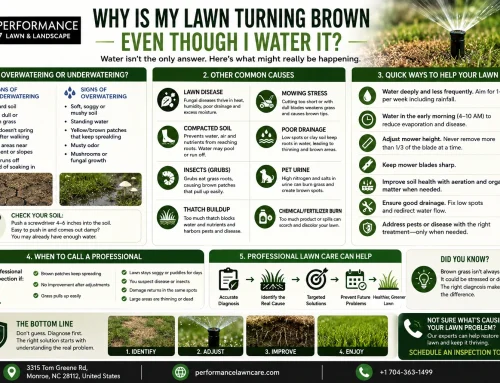
Why is my lawn turning brown despite regular watering?
A lawn can turn brown despite regular watering when the problem is not only moisture. Brown grass may point to compacted soil, disease, heat stress, dull mower blades, insects, poor drainage, or fertilizer damage.
Water helps only when roots can absorb it. If soil is compacted, water may sit near the surface or run off. If roots are weak, the grass may still dry out quickly.
Watering is not always the answer
Many homeowners respond to brown grass by watering more. That can sometimes make the problem worse. Too much water can encourage fungus, shallow roots, and soggy soil.
Brown patches may also appear after mowing too low. Scalped grass loses shade protection and becomes stressed faster in heat. Maintaining the proper lawn mowing height is one of the simplest ways to reduce unnecessary stress.
A professional can check soil conditions, mowing height, watering patterns, and visible symptoms. That inspection helps separate drought stress from pests, disease, and root problems.
What causes patchy or thinning grass?
Patchy or thinning grass can come from shade, soil compaction, poor seed establishment, pet damage, heavy foot traffic, pests, disease, improper mowing, or low nutrients. Thin grass often starts small, then spreads when weeds take advantage of open soil.
A patchy lawn is rarely fixed by seed alone. If the underlying problem remains, new grass may fail again.
Common reasons grass thins out
Shade can limit growth because grass needs enough sunlight to produce energy. Compacted soil limits root expansion. Heavy traffic can damage crowns and create hard soil.
Improper mowing can also thin the lawn. Cutting too short weakens grass and allows weeds to compete.
Professional lawn maintenance looks at the full pattern. A small thin area near a walkway may be traffic-related. A shaded area under trees may need a different approach. A spreading patch may suggest disease or insects. If you’re seeing recurring thin or damaged areas, understanding why your grass is patchy can help explain the underlying causes.
When should I call a professional lawn care company?
You should call a professional lawn care company when problems keep returning, spread quickly, or do not improve with basic maintenance. Waiting too long can make recovery slower and more expensive.
Professional help is also smart when you are unsure whether the issue is weeds, insects, disease, soil, drainage, or mowing stress.
Situations that need expert attention
Call for help when brown patches grow larger, weeds take over, bare spots stay empty, water stands after rain, grass pulls up easily, or the lawn looks worse after regular mowing and watering.
A lawn care company can inspect the property, identify likely causes, and recommend a practical plan.
For professional lawn maintenance in Monroe, NC, local conditions matter. Clay soil, summer heat, heavy rain, and changing seasonal growth can all affect lawn health.
The goal is to diagnose before treating. Guessing with random products can waste money and delay recovery. It can also create new problems, such as fertilizer burn, overwatering, or unnecessary chemical use that weakens already stressed turf.
Can weeds indicate a deeper lawn health problem?
Yes, weeds can indicate a deeper lawn health problem. Weeds often move into weak, thin, compacted, or underfed areas where healthy grass is not dense enough to compete.
A few weeds are normal. A lawn full of weeds usually signals poor turf density or an underlying condition.
What weeds may reveal
Different weeds can suggest different issues. Some thrive in compacted soil. Others prefer wet areas, thin turf, bare soil, or weak root zones.
If weeds return after repeated treatment, the problem may not be the weed itself. The lawn may need thicker grass, better mowing height, improved soil, or seasonal weed control.
Professional service focuses on both weed control and lawn strength. Killing weeds without improving turf health leaves open space for new weeds.
A healthy lawn is one of the best long-term weed defenses.
What are common signs of lawn disease or pest damage?
Common signs of lawn disease or pest damage include brown circles, yellowing patches, irregular dead areas, chewed grass blades, thinning turf, webbing, mushrooms, spots on blades, or grass that pulls up easily.
Disease and pest damage can look similar to drought or poor mowing. That is why proper diagnosis matters.
Warning signs to watch
Lawn disease often appears during warm, humid, or wet weather. It may show as circular patches, discolored blades, or areas that spread even with watering.
Pest damage may show as sudden thinning, birds feeding heavily in the yard, or grass that lifts like loose carpet because roots have been damaged.
Some problems spread fast. Early treatment can limit damage before large sections decline.
A professional can inspect the lawn closely and recommend the right response instead of applying unnecessary fertilizer, water, or chemicals. If disease is suspected, proper evaluation of lawn disease concerns is far more effective than guessing.
Why does my lawn have bare spots that won’t grow back?
Bare spots that will not grow back usually mean seed or sod is not solving the real issue. The cause may be compacted soil, poor drainage, pet urine, shade, erosion, pests, disease, buried debris, or heavy traffic.
If grass cannot establish roots, the spot will keep failing.
Why bare spots return
Bare soil dries out quickly and invites weeds. It may also become harder over time as rain and foot traffic compact the surface.
Some bare spots are caused by repeated stress. A path where people walk, a dog’s favorite area, or a low spot that stays wet will not recover without correcting the cause.
Professional maintenance may include aeration, soil improvement, overseeding, drainage correction, or a change in mowing and watering practices.
The right fix depends on the location and pattern of the damage. It also depends on whether the area receives enough sunlight and irrigation support daily during recovery.
Is standing water a sign my lawn needs professional attention?
Yes, standing water is a sign your lawn may need professional attention, especially if puddles remain long after rain or irrigation. It can point to compacted soil, grading problems, drainage issues, low areas, or heavy clay soil.
Standing water weakens grass roots and creates conditions for disease, mosquitoes, mud, and erosion.
Why drainage problems matter
Grass roots need air as well as water. When soil stays saturated, roots can suffocate and become more vulnerable to disease.
Wet areas are also difficult to mow cleanly. Mowers can create ruts, tear grass, and compact soil further.
A professional can evaluate whether the issue is surface runoff, soil compaction, watering management, irrigation, grading, or drainage design.
Ignoring standing water often leads to thinning grass, weeds, and recurring bare spots.
Key Takeaways
Professional lawn maintenance is worth considering when brown grass, thinning areas, weeds, bare spots, pests, disease signs, or standing water keep coming back. These problems often point to deeper issues such as compacted soil, poor drainage, weak roots, improper mowing, or nutrient imbalance.
Quick fixes may hide symptoms without solving the cause. A professional inspection helps identify what the lawn actually needs and prevents wasted treatments.
Acting early can protect grass health, improve curb appeal, and reduce the cost of restoring a struggling yard over time with fewer repeat issues.
Get Your Lawn Back On Track
When a lawn keeps showing warning signs, guessing can make the problem worse. At Performance Lawn & Landscape, we help homeowners understand what is happening beneath the surface and what steps make sense for long-term improvement.
Our team can assess brown patches, weeds, bare spots, drainage issues, thinning grass, and seasonal stress. Whether the solution involves lawn fertilization, improving soil conditions, or correcting irrigation issues through irrigation repair, we focus on long-term lawn health rather than temporary fixes.